









• About Us
  • Subscription
  • Contact Us
Thursday, April 23, 2026
  • Login
Iran Times
  • Home
  • What’s the News
    • All
    • baygani
    Army Says It Makes Some Officers UN Peacekeepers

    Army Says It Makes Some Officers UN Peacekeepers

    Iran May Curry Favor With Egypt By Axing Street Name

    Iran May Curry Favor With Egypt By Axing Street Name

    Regime Barks Loudly At Dog Owners

    Regime Barks Loudly At Dog Owners

    Campaign To Rid Iran of Afghans Moves Into Trumpian High Gear

    Campaign To Rid Iran of Afghans Moves Into Trumpian High Gear

    Russia, China Interfere To Stunt Iran Nuclear Plan

    Russia, China Interfere To Stunt Iran Nuclear Plan

    Regime Hangs Convicted Killer of 7 in 2022 Protests

    Regime Hangs Convicted Killer of 7 in 2022 Protests

    Trump Kicks Trio Off Iran Issues For Being Too Pro-Israel

    Trump Kicks Trio Off Iran Issues For Being Too Pro-Israel

    Omid The Siberian Crane May Have Died

    Omid The Siberian Crane May Have Died

    Israel Built Drones In A Factory Set Near Tehran

    Israel Built Drones In A Factory Set Near Tehran

  • Diaspora
  • Economy
    Economist Says Biggest Problem For Iranian Economy is State Controls

    Economist Says Biggest Problem For Iranian Economy is State Controls

    US Stops Turkmen Gas Crossing Iran For Iraq

    US Stops Turkmen Gas Crossing Iran For Iraq

    For Umpteenth Time, Auto Privatization Again Killed

    For Umpteenth Time, Auto Privatization Again Killed

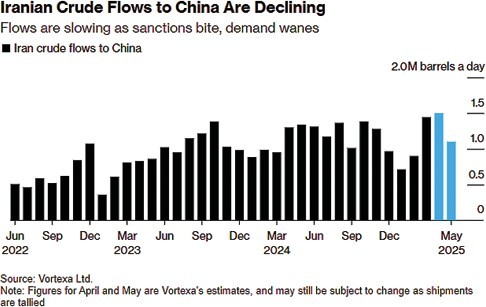
    China Oil Buy Drops, But Remains High

    China Oil Buy Drops, But Remains High

    Gov’t Ends Ban Importing Goods Made In Iran

    Minimum Wage is Boosted 45%

    Banks Must Keep More Money On Hand

    Banks Must Keep More Money On Hand

    Russian Says Iran Watermelons Unsafe

    Russian Says Iran Watermelons Unsafe

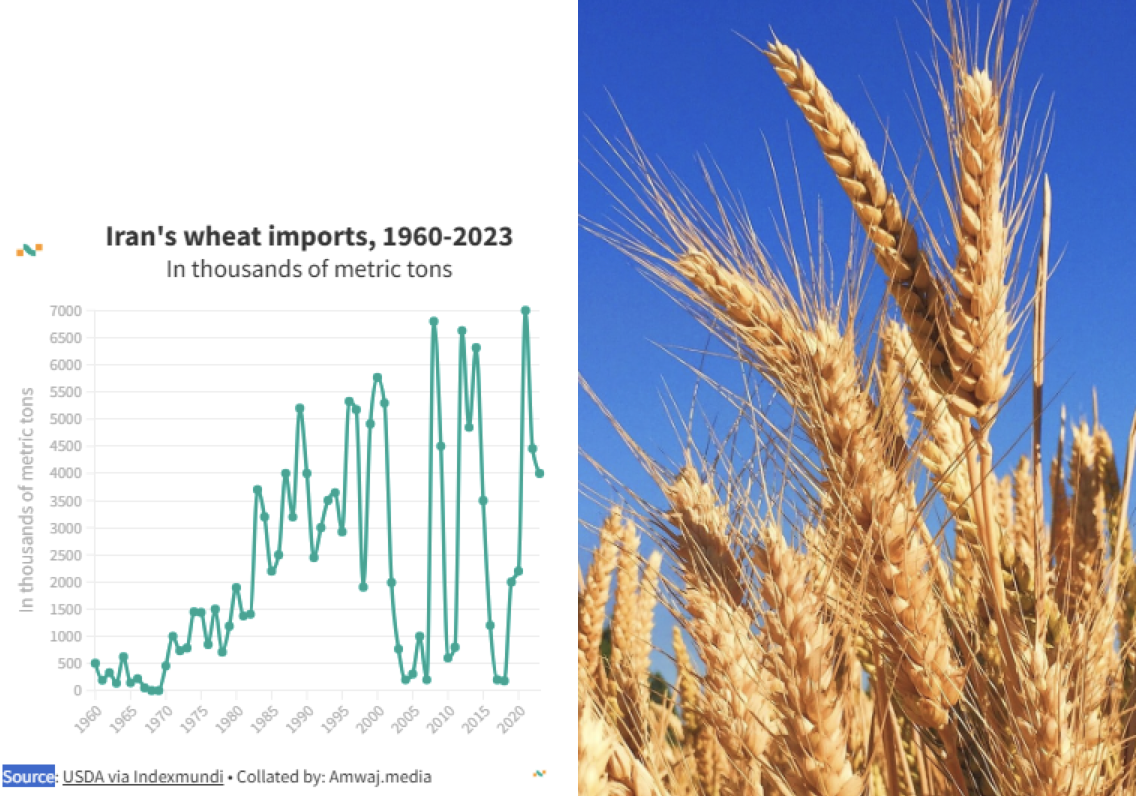
    Iran Not To Be Self-Sufficient In Wheat This Year

    Iran Not To Be Self-Sufficient In Wheat This Year

  • Tidbits and Morsels
  • Latest
    Hell Comes To A Pasdar Base North of Tehran

    Hell Comes To A Pasdar Base North of Tehran

    US Mail To Iran Is Suspended

    President Takes Time Off For Surgery

    President Takes Time Off For Surgery

    After Month Of Talks, Trump Decides He Wants No Enrichment

    The Lights Are Going Out All Over Iran

    Drone Attack That Killed 3 US Troops in Jordan Could Have Been Foiled

    Iranian-Canadians Reportedly Turned Away at US Border

    Iranian-Americans: an Account of Integration and Achievement

    Jamshid Myth

  • About Us
  • Advertising
  • Subscription
No Result
View All Result
  • Home
  • What’s the News
    • All
    • baygani
    Army Says It Makes Some Officers UN Peacekeepers

    Army Says It Makes Some Officers UN Peacekeepers

    Iran May Curry Favor With Egypt By Axing Street Name

    Iran May Curry Favor With Egypt By Axing Street Name

    Regime Barks Loudly At Dog Owners

    Regime Barks Loudly At Dog Owners

    Campaign To Rid Iran of Afghans Moves Into Trumpian High Gear

    Campaign To Rid Iran of Afghans Moves Into Trumpian High Gear

    Russia, China Interfere To Stunt Iran Nuclear Plan

    Russia, China Interfere To Stunt Iran Nuclear Plan

    Regime Hangs Convicted Killer of 7 in 2022 Protests

    Regime Hangs Convicted Killer of 7 in 2022 Protests

    Trump Kicks Trio Off Iran Issues For Being Too Pro-Israel

    Trump Kicks Trio Off Iran Issues For Being Too Pro-Israel

    Omid The Siberian Crane May Have Died

    Omid The Siberian Crane May Have Died

    Israel Built Drones In A Factory Set Near Tehran

    Israel Built Drones In A Factory Set Near Tehran

  • Diaspora
  • Economy
    Economist Says Biggest Problem For Iranian Economy is State Controls

    Economist Says Biggest Problem For Iranian Economy is State Controls

    US Stops Turkmen Gas Crossing Iran For Iraq

    US Stops Turkmen Gas Crossing Iran For Iraq

    For Umpteenth Time, Auto Privatization Again Killed

    For Umpteenth Time, Auto Privatization Again Killed

    China Oil Buy Drops, But Remains High

    China Oil Buy Drops, But Remains High

    Gov’t Ends Ban Importing Goods Made In Iran

    Minimum Wage is Boosted 45%

    Banks Must Keep More Money On Hand

    Banks Must Keep More Money On Hand

    Russian Says Iran Watermelons Unsafe

    Russian Says Iran Watermelons Unsafe

    Iran Not To Be Self-Sufficient In Wheat This Year

    Iran Not To Be Self-Sufficient In Wheat This Year

  • Tidbits and Morsels
  • Latest
    Hell Comes To A Pasdar Base North of Tehran

    Hell Comes To A Pasdar Base North of Tehran

    US Mail To Iran Is Suspended

    President Takes Time Off For Surgery

    President Takes Time Off For Surgery

    After Month Of Talks, Trump Decides He Wants No Enrichment

    The Lights Are Going Out All Over Iran

    Drone Attack That Killed 3 US Troops in Jordan Could Have Been Foiled

    Iranian-Canadians Reportedly Turned Away at US Border

    Iranian-Americans: an Account of Integration and Achievement

    Jamshid Myth

  • About Us
  • Advertising
  • Subscription
No Result
View All Result
Iran Times
No Result
View All Result

The Supreme Leader and ‘unpardonable sin’

February 14-2014

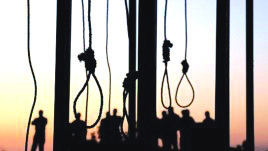
excecutionBy Amir Taheri

Could politics lead to crime? If yes, how could one define a political crime? These are the questions facing a group of Iranian jurists who have been asked to draft a law on “political crimes.”

The move is motivated by two considerations.

First, the new president, Hassan Rouhani, is trying to do a pirouette to release dissident leaders Mir Hossein Mousavi, Mehdi Karrubi and Zahra Rahnavard, who have, in effect, been held hostage since 2011 without being charged. The state-owned media refer to the trio as “heads of fitnah,” a theological term that can be roughly translated as “sedition.” However, the official legal system in Iran does not even recognize fitnah as a concept. Such a charge could only be heard in exceptional Islamic Revolutionary Tribunals created in 1979 by Ayatollah Khomeini to organize the mass execution of his opponents. The tribunals were initially meant to be disbanded after a year. Thirty-five years later, they are still active. Since Rouhani became president they have issued over 400 death sentences. The Tribunals waste little time on “legal niceties.” If you are regarded as a threat to the regime you are charged with “waging war on Allah” or “spreading corruption on Earth” and sentenced to death. However, putting the three hostages in front of such tribunals is a high-risk move. The trio never questioned the revolution or the regime. Nor have they joined calls for abolishing “velayat-e faqih” (rule by a supreme Islamic jurist), under which a single mullah operates as dictator. All they have said is that the 2009 presidential election was rigged.

Clearly, that is nothing but a political opinion, the like of which one finds in many other countries. (In the US, for example, many people still insist that the 2000 presidential election won by George W. Bush was rigged.) The Khomeinist regime could not execute Mousavi, Karrubi and Rahnavard for holding and expressing a political opinion, especially since the three never called on the people to challenge Mahmoud Ahmadinejad’s victory, for example by refusing to pay taxes or by organizing civil obedience.

The way out is to charge them with political crime, sentence them to symbolic punishment—for example, loss of the right to stand for elections for 10 years—and then release them.

The second consideration that has prompted Rouhani to seek a law on political crime is to give some credence to his claims of moderation. He has worked hard to win the “moderate” accolade from US Secretary of State John Kerry. However, that sobriquet is unlikely to last against a spree of background executions. Rouhani apologists tell me that the mullah–president himself is “unhappy” about so many executions but cannot do anything about it. That claim echoes one made by President Mohammad Khatami a decade ago when he too whispered in friendly ears that he had nothing to do with executions and mysterious killings.

However, drafting a law on political crime would not be easy.The Iranian judicial system developed over at least 1,000 years and was influenced by ancient Persian traditions, Islamic law and the Napoleonic Code, uses numerous terms to describe breaches of the law. These include “jorm” (crime), “jonheh” (offense), “bazeh” (wrong-doing), “taadi” (transgression), and many more. None of those terms, however, could be applied to the holding of a political opinion, for example, the suggestion that Iran could be better off without the dictatorship of a mullah. More importantly, the Iranian judicial lexicon does not include terms with theological charges, such as “zanb” and “gonah,” which mean “sin” in Arabic and Persian respectively. In the Iranian judicial system committing a sin, although reprehensible, is not a crime referable to a court of law.

The proposed legislation could only describe a political crime as a soft transgression. And since punishment should fit the crime, the proposed law could not demand that people who have an opinion that differs from that of the “Supreme Guide” should be hanged.

This is why, in a roundabout way, Khamenei has entered the debate. In a recent speech he claimed that “opposing the authority of the revolution” should be regarded as an “unpardonable sin.” The term he used was “gonah nabakhshudani” in Persian and “zanb layughfar lahu” in Arabic, a theological shibboleth that refers to the sin of associating others with the Unique God (shirk). Thus, Khamenei’s position is in direct contradiction with Iranian law and Islamic Shari’a, in which the concept of “unpardonable sin” is clearly delineated.

Worse still, Khamenei’s position also contradicts the Constitution of the Islamic Republic. Article 168 of the constitution states that “political and media crimes” should be judged by a jury. The text proceeds to state that the definition of political crime would be fixed by the constitution.” The trouble is that no definition is offered. Nor are we told how a jury is selected. However, the text makes one thing clear at least implicitly: a political crime cannot be regarded as “unpardonable.”

If Khamenei succeeds in equating political transgressions with “unpardonable sin,” there is no need for a new law. Anyone who disagrees with him ought to be put to death. A Soviet version of “unpardonable sin” existed under Stalin’s cult of personality and was used in the notorious Moscow trials and mass executions.

Iranian jurists face another problem. The concept of a jury, absent in Islamic law, was smuggled into the constitution to fool Westernized middle classes. In Khomeinist tribunals a single judge decides and, strictly speaking, no appeal is permitted. (Appeals are permitted if your case goes to courts left over from the time of the shah.)

The real question Iran faces has nothing to do with defining political crime. It is whether Iran, a society aspiring after modernization, could continue living with an archaic legal system bedeviled by contradictions.

That, however, is a political question, and posing it would be an “unpardonable sin” according to the “Supreme Guide.”


Amir Taheri was the executive editor-in-chief of the daily Kayhan in Iran from 1972 to 1979. He has worked at or written for innumerable publications, published eleven books, and has been a columnist for Asharq Al-Awsat since 1987. 

Previous Post

Thousands suffer from chemical weapons quarter century later

Next Post

4-year-old Irani raped in India

Related Posts

Can Israel Destroy Iran’s Nuclear Program?
Commentary

Can Israel Destroy Iran’s Nuclear Program?

The Right Path to Regime Change In Iran
Commentary

The Right Path to Regime Change In Iran

Commentary

Trump has Achance to Strike a Deal with Iran

Next Post

4-year-old Irani raped in India

County Council seat sought in Md

Leave a Reply Cancel reply

Your email address will not be published. Required fields are marked *

  • About Us
  • Contact Us
  • Advertising
  • Subscription
  • Culture
  • Economy
Call us: +1 (202)-659-9868

© 1970-2025 Iran Times - ‬An‭ ‬Independent‭ ‬Newspaper

Welcome Back!

Login to your account below

Forgotten Password?

Retrieve your password

Please enter your username or email address to reset your password.

Log In
No Result
View All Result
  • Home
  • What’s the News
  • Diaspora
  • Economy
  • Tidbits and Morsels
  • Latest
  • About Us
  • Advertising
  • Subscription

© 1970-2025 Iran Times - ‬An‭ ‬Independent‭ ‬Newspaper

Are you sure want to unlock this post?
Unlock left : 0
Are you sure want to cancel subscription?
Go to mobile version