



The operation appears to have been successful, though it will involve months of rehab and several more operations before 49-year-old Royce Reid will know whether he can play golf again.
“I’m a lucky guy to have it [the arm],” said Reid. “I’m a lucky guy to be alive. Yes!”
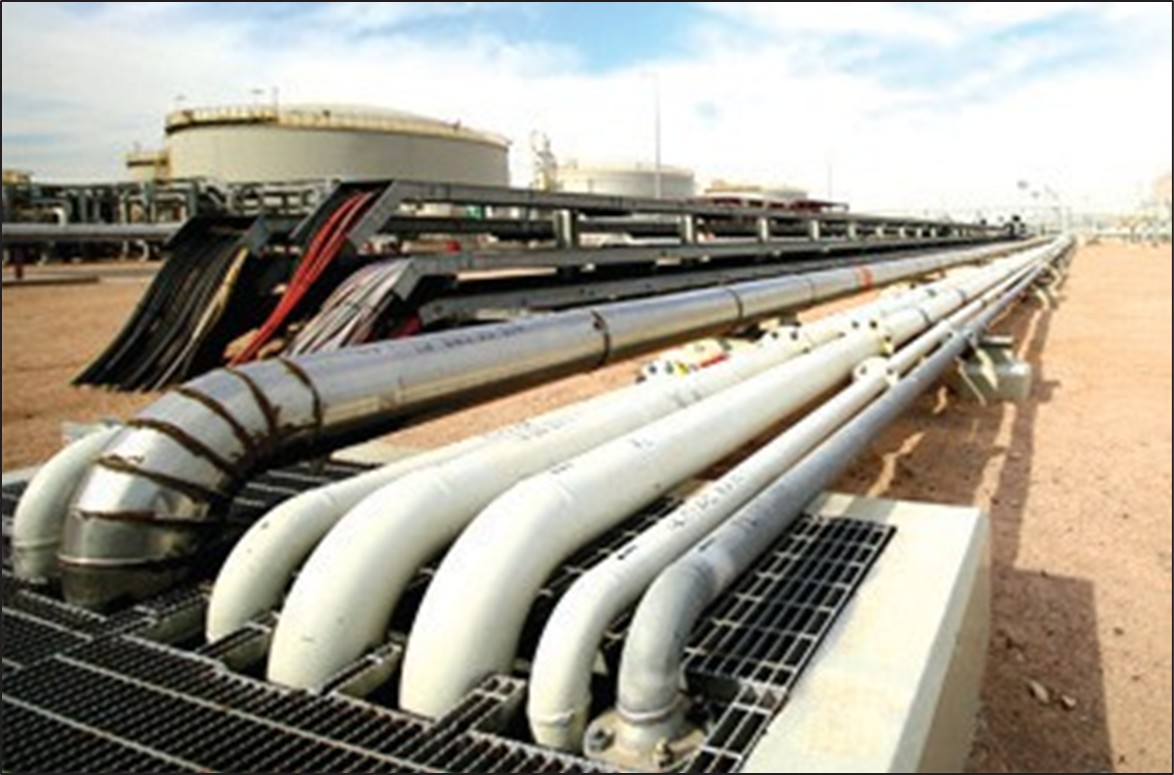
Reid’s left forearm was severed August 27 when it got caught in a pipe conveyor. In the hours it took to get him to Parkland Memorial Hospital in Dallas, the Navy veteran — who served in the Persian Gulf during the 1991 Gulf War — nearly bled to death.
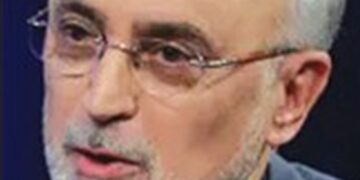
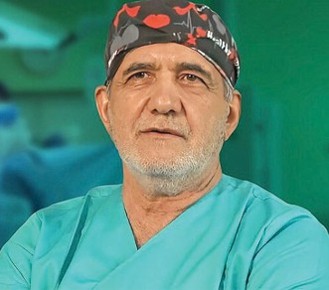
“When the muscles start to die, you cannot put the arm back on,” explained Dr. Bardia Amirlak, a University of Texas Southwestern plastic surgeon who was on call at Parkland when Reid was brought into the trauma center.
Dr. Amirlak thought at first there was little chance of saving an arm amputated seven hours earlier, which is typically longer than an amputated limb is viable, especially when its not cooled on ice as it was in this case.
Furthermore, completing the amputation would allow Reid to go home in days and be ready for a prosthesis very soon. Reattachment would mean much surgery, months of rehabilitation and no certain outcome.
“At the end, he looked at me and said, ‘I want to hold my grandchildren with my own arm,’” Dr. Amirlak told WFAA-TV. “Of course, we had talked about prosthesis and other options, but that’s when I made the decision to make an effort to put his arm back on. The key in such cases is the decision on when and how to attach a limb back.”
Dr. Amirlak decided to try an experimental procedure that had never been written about or formally taught. “I knew if I didn’t do this particular technique, Mr. Reid would surely lose the arm. As plastic surgeons, our role is to think outside the box and at the same time maintain safety and logic. Whether I am doing a facelift, nose job, or hand transplant, thinking outside the box is what is the key element to superior results,” Dr. Amirlak told the Iran Times.
He had previously done work on hand and microsurgery at the Christine M. Kleinert Institute in Louisville, Kentucky, where he trained under Dr. Warren C. Breidenbach, who performed the first hand transplant in the United States in 1999. Dr Amirlak was part of the operative team that performed the third hand transplant in the US and is also part of a new hand transplant program that the University of Texas Southwestern launched just in July.
Dr. Sumeet Teotia, who assisted in the operation, said, “Dr. Amirlak did something our entire department had not heard about. All I can say is that I was there when Dr. Amirlak was doing this, and it was amazing. The forearm was completely shattered. He revascularized the entire limb.”
First, in order to restore oxygen to Reid’s amputated arm, he transfused blood directly from Reid’s left leg.
“We hooked a tube up to the artery in the leg, and took it outside his body and transfused it directly into his arm to keep it alive. This is called extracorporeal transfusion and we had to cool the room temperature for this—sort of like circulating blood to the heart in cardiac surgery,” Dr. Amirlak explained. “We did that while we were working on his bones and the blood vessels to keep the muscles alive.”
“The blood oozes out,” he went on, “You have to be very careful to control how much you transfuse and you have to do it very quickly while you’re hooking up the vessels so he doesn’t lose too much blood.”
Amirlak was born in New York City in 1975 while his father was doing medical training there. His family soon moved back to Tehran. But they moved frequently and over the next two decades Amirlak was schooled in Tehran, Dubai and the United States. He went early enough and long enough to American schools that he speaks American-accented English.
He went to medical school at Universidad Iberoamericano in the Dominican Republic. He finished general surgery training at Creighton University in Omaha. Amirlak did specialty training in plastic surgery at Case Western Reserve University in Ohio and in hand microsurgery and peripheral nerve surgery at the Kleinert Institute. He is currently an assistant professor of plastic surgery at UT Southwestern Medical Center and specializes in hand surgery, migraine surgery, and advanced facial cosmetic surgery . Eighteen hours of surgery and two months later, Reid is regaining some sensation and slight movement in an arm he never expected to see or feel again.
“When I went into surgery and came out, I didn’t think I would have a hand,” Reid said. “I was glad to see one when I came out of surgery though!”
Reid’s military survival training helped. He managed to free himself and his arm from the machinery. Then he explained to several fellow workers how to apply a tourniquet to stop the blood pumping out of his arm. He walked under his own power to the ambulance, cradling his own dangling forearm, still attached only by some skin and cartilage.
Now he has big plans for the arm Amirlak and his team saved. “Once I get this brace off of it and am able to use it,” he says, “I plan on holding my grandkids again.”
Doctors said it may take many more operations and years of rehab. But they are hopeful Reid will regain full function of his arm.
The hospital where Reid’s arm was re-attached, Parkland, is the hospital where President John F. Kennedy died 48 years ago this month.
Two days after the news of the operation in Texas was published last week, the Iranian Students News Agency (ISNA) in Iran reported that a surgeon in Tehran, Dr. Fazlollah Sajjadi, had re-attached the entire arm of a workman that had been cut off by a concrete mixer October 22. ISNA said the unnamed man was taken to several hospitals in succession but each rejected him because of the severity of the damage. After more than six hours during which the arm was carried about in an ice-filled container, the man reached Sajjadi who accepted him and re-attached the arm in a seven-hour operation, ISNA claimed.