










April 15, 2016
by Shireen T. Hunter
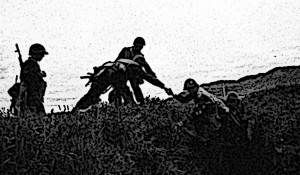
The problem with frozen conflicts is that they are never actually frozen. They are put in cold storage for a while, and whenever conditions seem propitious or expedient for any of the players they are brought out of storage. Once out, they are liable to begin melting really fast. The dispute between Azerbaijan and Armenia over the mountainous region of Karabakh and several other cities is one such conflict.
Recent skirmishes leading to the deaths of tens of Azerbaijani and Armenian soldiers demonstrated how quickly so-called frozen conflicts can melt. Unfortunately, those not directly involved in the conflict tend to forget about it and only become interested when there is risk of its reigniting and thus somehow adversely affecting the interests of outsiders. Only then are they shaken out of their complacency. Meanwhile, innocent people on both sides of the conflict pay the price of this indifference.
When the frozen conflict turns hot, outside powers exhort parties to the conflict to solve their problems and be reasonable. These outsiders conveniently forget the extent to which their own policies have contributed to the dispute remaining unresolved.
The Shadow of History
Another tendency on the part of those regional and international players not directly engaged in the conflict is to forget its history and to grow impatient with the parties’ inability to overcome their past. But it is as useless to ask people to forget history as it is to ask individuals to forget their childhood traumas. It can’t be done. The only way to overcome the domination of history is to face it.
Karabakh has a long and tortuous history, as does the rest of the Caucasus. Moreover, it has significant symbolic importance for both Armenia and Azerbaijan. For Armenia, Karabakh is important partly because, as put by the American-Armenian scholar Richard Hovannissian “…while the rest of Armenia was submerged under foreign control a flicker of freedom was maintained in Karabakh, albeit under Iranian suzerainty.”
Toward the end of the 19th century, Karabakh also became the place where nascent Azerbaijani nationalism took shape and flourished, hence the region’s symbolic value to Azerbaijan. Following the fall of the Tsarist Empire in 1918, the region became the subject of rivalry between the Ottoman Empire and the British and their White Russian allies. When the Ottomans helped establish the independent republic of Azerbaijan, they gave Karabakh to Azerbaijan, but the Armenians of Karabakh never accepted this decision.
The Bolshevik government initially gave Nakhijevan and Karabakh to Armenia. But Moscow later changed its mind and transferred them to the new Republic of Azerbaijan, in part because the newly formed Soviet Union in 1923 wanted to reach a modus vivendi with the new Turkish Republic. Finally, Karabakh was made an autonomous oblast within Azerbaijan, which the Armenians never accepted. Clashes and protests continued throughout the Communist era. Several times, Armenia requested the return of the Karabakh region from the Soviet authorities.
Rising Interethnic Tensions
A hallmark of the period 1987-1992 in the Soviet Union was the manipulation of nationality issues in the competition of power between the hardliners and Mikhail Gorbachev and later between Gorbachev and Boris Yeltsin. Meanwhile, the same process took place at the level of republican elites. Those who opposed reform by instigating ethnic violence wanted to show that Gorbachev’s Perestroika and Glasnost (“restructuring” and “openness”) only led to turmoil. One consequence was the killing of large numbers of Armenians in the Azerbaijani town of Sumgait in 1988, which triggered the larger conflict. Later, Yeltsin used this issue to gain support among non-Russian republics. His famous advice to them to “take as much sovereignty as you can swallow” shows his turn of mind. These manipulations of nationality issues contributed to the escalation of the dispute over the region and also led to similar problems in Georgia with the Ossetians and Abkhazians.
The USSR’s problems and later its dismantling also brought to the surface long-dormant regional rivalries. In particular, Turkey wanted to become the main power in the Caucasus and Central Asia as a champion of Turkic and Turkic-speaking peoples. It thus sided completely with Azerbaijan. By doing so, Turkey also wanted to thwart any possible Iranian influence in Azerbaijan, whose people have close historical, religious, and cultural ties. At one juncture, in 1992, Turkey sabotaged an Iranian mediation effort for Karabakh. Later, when visiting Baku, Turkish President Suleiman Demirel told the Azeris that they should not look to Iran to solve their problems. Later, Turkey’s policy of siding completely with Azerbaijan and closing its borders with Armenia has not helped matters. It has exacerbated Armenia’s feeling of geographical and ethnic isolation in the region.
By contrast, Iran has followed a more balanced policy. Concerned about a Turkic alliance with irredentist claims toward some of its territory, Iran sees Armenia as a valuable balancing factor in regional politics. At the same time, its border with Iran serves as one of Armenia’s lifelines. For example, during the 2008 Russia-Georgia war, the Iranian border was Armenia’s only outlet to the outside world. However, because of the US policy of containing Iran, relations between it and Armenia could not advance very far and many plans to expand road and rail links and the transfer of Iranian energy have remained unrealized. Of course, Russia, too, wants to keep Armenia dependent and subservient and thus also frowns on its ties with Iran.
Meanwhile, lured by Azerbaijan’s energy wealth and as a way of using it to pressure Iran, the United States and the European countries indulged the Republic. This attitude gave Azerbaijan, which is more populous than Armenia (9.6 to 2.9 million people) the perception that it can wait out Yerevan and at an opportune moment find a military solution. Azerbaijan also skillfully manipulated Middle East politics, especially Iranian-Israeli hostility, and increased its influence in Western capitals by cozying up to Israel. Let’s not forget that when the option of attacking Iran seemed real, Azerbaijan was viewed as a possible military launching pad against Iran.
Where to Go from Here?
The first step towards resolving the conflict is to realize that there is no such a thing as a frozen conflict. They have a bad tendency to start melting at the slightest provocation.
Second, all players, inside and outside the conflict, must also realize that they cannot get everything on their wish lists. Clearly, most of the territory that Armenia has captured from Azerbaijan should be returned. But a special arrangement must also be made for Karabakh and the Lachin corridor, which links Karabakh to Armenia proper. This will help ease Armenia’s sense of isolation.
Third, Turkey must open its borders with Armenia and in general seek reconciliation with the country. Fourth, Iran’s role as a party acceptable both to Armenia and Azerbaijan should be recognized, and tripartite and quadripartite cooperation involving Armenia, Azerbaijan, Iran, and Turkey should be encouraged. Fifth, European countries should help more in Armenia’s economic development. Sixth, efforts should be made to keep Middle East politics from unduly influencing regional relations.
Finally, the West needs to recognize that Russia is and will likely remain a player in the region. As such, the West needs to keep Russian perspectives in mind. Meanwhile, however, Russia should stop seeing this region as its own private property to do with as it pleases. Only then can the process of tackling the Karabakh problem begin.
Shireen T. Hunter is a Research Professor at Georgetown University’s School of Foreign Service. Her latest book is Iran Divided: Historic Roots of Iranian Debates on Identity, Culture, and Governance in the 21st Century (Rowman & Littlefield, 2014).