









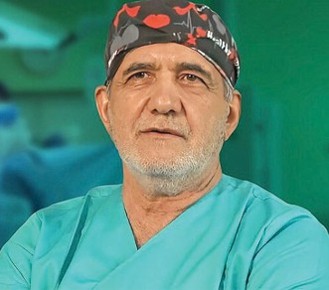

When the Boeing 727 flight from Moscow to Tehran came in to land, the front landing gear would not extend. In an extraordinary show of skill that was captured on video, pilot Hooshang Shahbazi managed to bring the plane in at Mehrabad Airport with the nose pointing slightly in the air. The plane glided down the bulk of the runway balanced on the rear wheels, with the nose hitting the tarmac only when the plane had already slowed considerably.
The Independent of London said it checked Internet forums frequented by professional pilots and found nothing but admiration for the professionalism involved in landing the plane.
The response from Iranian officials, however, was entirely different. Shahbazi was  suspended from flying for two months while the authorities investigated.
The uproar over this seemed to embarrass the government. Within days, the Transport Ministry invited reporters and photographers to a special ceremony at which Shahbazi was praised for his flight skills. Transport Minister Ali Nikzad said, “Captain Shahbazi and his crew landed the plane safely with their faith in God and exceptional skills.”
When the pilot was suspended, he didn’t sit silently. He complained about his treatment to the reformist daily Etemad. He noted the lionizing of American pilot Chesley Sullenberger, who landed an Airbus A320 in the Hudson River in 2009 after the engines cut out when the engines sucked in a flock of birds. He compared it to his own case—“They have not even called to say thank you,” he remarked.
Shahbazi also said he had diverted the plane to Mehrabad Airport, Tehran’s domestic airport, instead of attempting to land as planned at the Imam Khomeini Airport, which handles international flights, fearing that a crash there would have embarrassed the regime more. “That would have been a disaster, also politically,” he said.
One of the Russian passengers on board, Oleg Gordeyev, told the Russian website LifeNews that the captain had made no announcement about the danger the flight was in. Instead, passengers noticed that the plane seemed to be circling interminably and saw panic on the faces of the flight attendants.
The pilots were circling in order to use up as much fuel as possible before attempting the landing, to minimize the chance of fire when the plane touched down. The passengers realized something was wrong when one of the flight attendants broke down in hysterics, and the other members of the cabin crew had to lock that attendant in a toilet, said Gordeyev.
A few minutes before landing, the pilots informed passengers that there would be an emergency landing, and told them in how to take up the brace position. “It was scary,” recalled Gordeyev. “But when we landed, we didn’t feel much, just a small bump when the plane’s nose touched the runway.” After the landing, passengers jumped from the aircraft through the emergency chutes.
A spokesperson for Iran Air said the plane had suffered only superficial damage, and will be put back into service after repairs are carried out.
An anonymous Iran Air pilot was quoted by the Fars news agency as saying the nose wheel was found to have been jammed by a small piece of plastic that was stuck in a pressure line. Iran Air has made no official announcement of the cause.
The 727 was 40 years old and carrying 94 passengers and 19 crewmen, all of whom escaped unharmed.
A week after the 727 landing, a Polish Boeing 767 with 230 people on board made an emergency belly landing at Warsaw airport when none of its landing gears would come down. The Polish Lot aircraft, en route from New York, circled Warsaw to burn up fuel and allow emergency crews to pour fire retardant on the runway. A spokesman for the airline said none of the passengers was injured.