











The Majlis report — avowedly based on information collected from the Subsidies Reform Organization, the Supreme Audit Court, Iran’s Chamber of Commerce and Industry, private economic analysts, and ordinary citizens – begins by pointing to certain positive aspects of the program (such as possible improvement in the Gini coefficient that measures wealth distribution, reduced consumption of certain energy products, and lower than expected inflation).
It then focuses on the reform’s glaringly negative aspects. The report’s detailed charges point to: (a) violations of the original statute’s spirit and letters such as undue haste in its implementation; (b) neglect of the mandated fiscal discipline; (c) failure to send periodic reports to the Majlis; (d) delay in repayment of funds borrowed from the Central Bank; (e) commitment to pay 455,000 rials a month to millions of recipients without having a clear and secure source of income; (f) inability to deliver the share of producers; and (g) facing the prospects of a $15 billion deficit – thus complicating the already thorny treasury problems.
The report suggested that the government should revamp the current cash payment system in both the amount and the number of recipients, calibrate monthly payments to family incomes, and put an end to uniform cash distribution.
Persistent refusals by the Subsidies Reform Organization to provide a full report of its operation have led to many unanswered questions regarding the exact number of welfare recipients, its sources of finance, and its compliance with the Majlis statute.
On the question of recipients, in late December 2011, Ahmadi-nejad, in a face to face meeting with an eastside Tehran audience, claimed that “75 million people” in Iran were actually receiving the monthly stipend. Now, since the Iran Statistical Center’s population clock put the country’s total residents in March 2011 at 75,161,018, then nearly every man, woman and child in Iran must have been on the government’s dole. Yet, apart from the untold number of families or individuals who, for one reason or another, initially did not wish to be included – and still do so – there must be substantial other subtractions from the total.
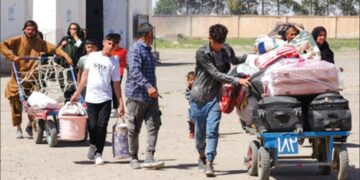
There are probably more than 2 million additional subjects—prisoners, shanty town “carton dwellers,” homeless drug addicts, runaway children, and others in remote localities (beyond a mere 161,018) – who are obviously without any bank account to which monthly pay is to be electronically deposited!
And there are numerous small and forgotten villages, like the one near Kermanshah in Western Iran (detailed by the Mehr news agency) with totally illiterate residents without birth certificates, marriage licenses, or identity cards – and with no water, power, telephone or banking services. The total official number thus can in no way be verified.
With respect to the program’s finances, the head of the government’s General Inspectorate, the chief of the Supreme Audit Court, the president of the Iran Chamber of Commerce and Industry, and the semi-independent press have all questioned: (1) the true sources of financing monthly cash payments; (2) the fate of production units’ share; and (3) the reasons for the shortfalls in the budgets of public utility companies.
There have been no explanations on the part of the Subsidies Reform Organization regarding the charges that it has used parts of the annual development budget, most of the producers’ share, and portions of the revenues from oil and electricity exports to finance its cash payments. According to these charges, the reform agency has drawn some $12 billion from three sources – $5 billion from the Central Bank, $2 billion from the Ministry of Energy’s budget, and $5 billion from oil export receipts – to supplement its revenues.
The third and equally troublesome question points to the contradictions between reform officials’ claims of payments to production units, and the nearly total rejection of these claims not only by eligible recipients, but also by the head of the Supreme Audit Court. The failure to protect business units against higher energy and other input costs, it is held, has resulted in: (a) large-scale bankruptcies and reduced capacity utilization; (b) a decline in industrial and agricultural investment; and (c) a shift of enormous accumulated liquidity to the gold and foreign exchange markets.
Finally, there has been no answer to the charges that the funds received from higher prices for water, power, and gas have not been fully disbursed to their producing companies. As a result, the enterprises engaged in these utilities have been unable to pay their contractors, and even their employees.
The stubborn and unabashed refusal of officials to reveal the program’s pertinent data continues to leave unanswered many pertinent questions regarding the program’s performance, as well as those previously raised regarding its objectives and operation. With no official reports available, however, some scattered data from public and private sources may be drawn upon to provide a few tentative conclusions regarding the program’s first phase of operation and its current status.
The most difficult puzzle to unravel is the program’s actual budget. Ahmadi-nejad and the spokesman for the Subsidies Reform Organization have both rejected the Majlis charges of a deficit. In fact, the president told an enthusiastic conference of the Islamic Workers’ Society in early September 2011 that due the country’s improving finances, monthly cash payments to households could be tripled! Thus, the program’s true income and outgo are a matter of pure conjecture.
Based on the reported number of registered recipients – officially claimed to have been 64 million at first, and gradually rising to variously reported 72-75 million by the end of the first year – each being paid 455,000 rials a month, with the last installment paid out in December 2011 – the program must have cost some $27-$32 billion at the then official exchange rate of $1=11,000 rials. At the same time, apparently no more than $17 billion is estimated to have been collected from phasing out subsidies, resulting in a $10-$15 billion deficit.
The effects of the subsidy phase-out on consumption, cost of living indices, and production efficiency are equally murky. According to some perfunctory (and un-corroborated) official statements, fuel oil consumption has declined by 27%; kerosene by 10%; gasoline by 6%, bread by 36%; and dairy products by an unspecified amount.
The most feared consequence of the reform, i.e., high inflation, has according to official statistics been fairly subdued. The projected cost of living increase, announced by the Central Bank at the start of the program, was a maximum of 15% in 12 months. Other credible projections ranged from 32% to 60%. Ridiculing these projections, President Ahmadi-nejad promised an actual decline after March 2011 (i.e., three months after the program’s initial price adjustment). The official cost of living index for December 2011 is reported as 19.6% higher than the figure for December 2010. Private estimates give much higher figures. Part of the reason for the relatively moderate official figure must have been the government’s order preventing private and public sector enterprises from raising their prices in the first three months of the program’s operation. After April 2011, however, prices were allowed to rise by only 10%. And, shortly after, prices started to climb by 1-1.5% per month.
With respect to the producers’ mandated share, the data are again highly controversial. While reform officials claim that $7.7bn has been paid to producers out of the receipts from adjusted prices, spokesmen for industry, agriculture, transportation and energy services deny having received any such payments. Similarly, the chief of the Supreme Audit Court stated in mid-September 2011 that the share assigned to industry in the first eight months of operation had not been paid. And the president of Iran Chamber of Commerce and Industry confirmed that aid to the production sector has been only in the form of low cost loans and not direct cash – i.e., a fixed amount of $130,000 at 4% interest – regardless of the borrowing enterprise’s energy use.
While it is too soon to gauge the impact of the program on either social welfare or productive efficiency, certain available data and observations may show the trend. A special weekly report by Radio Farda – specifically designed to gauge the impact of the subsidies’ reform on the lives of some 7.5 million Iranian working families (comprising 30 million people) during 2010-11 – shows that President Ahmadi-nejad’s promise of eradicating poverty in the first year of the subsidies’ reform has been far from being materialized. According to individual callers to the radio station, while government officials claim that the workers’ lot has improved, the opposite has been the case.
In the same vein, a Gallup measurement of global well-being, conducted in September 2011, has found that “suffering” in Iran had doubled to 26% in 2011 from 14% in 2008 – registering in the highest range worldwide. Classifying the respondents as “thriving”, “struggling” or “suffering”, the poll found 55% of Iranians to be “struggling” and only 20% “thriving.” Unemployment at 15% and underemployment at more than 35% has been found to be the main causes. Although obviously not accusing the welfare reform of being the culprit, the poll seems to indicate that the latter has not been of much help.
Countering the finance minister’s claim that 80% of the population has become better off since the reform, a former member of the National Council on Money and Credit told the ILNA news agency in late December 2011 that the “working class” has so far lost 50% of its purchasing power due to inflation and that monthly cash payments could compensate for the higher costs of only water and power for working families – with the result that they became worse off after the subsidies’ reform. According to a confirmed report, some 1.6 million households have failed to pay their monthly gas bills.
Similar sentiments seem to have been felt by the business community as well. In a poll regarding the climate for trade and business in Iran involving nearly 250 enterprises in the country’s 31 ostans (provinces) conducted in the spring of 2011, more than 65% of participants reported that the subsidies’ reform had raised their production costs much or very much; and 79% complained that their higher output costs had not been made up by the government. Only 9% reported that their higher expenses had been partially offset by the state. According to the president of the Tehran Chamber of Commerce, a large number of industrial enterprises are now operating at no more than 30% of their capacity due to higher, non-compensated, energy costs. A former Islamic Republic finance minister also claims that the reform has resulted in recession, further unemployment and higher prices.
Claiming that 70% of subsidies still remain in place, President Ahmadi-nejad told the press corps in early January 2012 that the second phase of the program would start before the end of the Iranian year on March 20. Responding to widespread complaints by the Chamber of Commerce and Industry, and many Majlis deputies, regarding the neglect of the production sector, government officials further promised to remedy the situation through direct financial assistance, low-cost loans and price rise allowances.
According to a statement in late December 2011 by the secretary general of the Reform Headquarters, some 3 million households comprising 10 million well-to-do individuals in the top 20% of the population – those with monthly incomes 10-to-20 times the current monthly cash receipts (i.e., individuals earning $445-$890 a month) – shall be excluded in the second phase. Wealthy families would first be asked to forego monthly cash receipts voluntarily so that the rest could get more. And if they did not, “more precise methods” would be employed, according to the head of the Subsidies Reform Organization.
However, the start of the new phase seems fraught with untold problems. To begin with, due to a steady rise in consumer prices, wide gyrations in the foreign exchange market, and mounting bank loan defaults, the head of the Chamber of Commerce and Industry, the chief of the Supreme Audit Court, the mayor of Tehran and others believe that the second phase should be postponed. Furthermore, the change in the roster of the recipients would seem to be neither easy nor lawful. Given the fact that after months of studies and preparations in early 2010, the government was still unable to differentiate among income recipients – and thus decided to include everyone on the roster – it is not certain that a universally satisfactory formula could easily be found this time. Finally, since depriving anyone of the bounty is a violation of the original statute, the new decision requires an amendment, or a new law, as the Majlis speaker has already indicated.
Interestingly enough, eliminating the richest 10 million individuals from the dole would probably save no more than $5 billion a year. And, even if this entire amount were to be distributed among the rest of the recipients, it could still not preserve the original value of welfare receipts set in December 2010 – since the economy has experienced more than 20% inflation in the meantime.
A year after the passage of long-awaited and positive economic reform legislation, the initial intent of the new law can hardly be recognized. The original intents were: (1) to rationalize hydrocarbon consumption through “opportunity cost” pricing; (2) enhance output efficiency through the adoption of new technologies; and (3) reduce income inequalities (caused by unfair distribution of price subsidies) through the establishment of a safety net for the poor.
Now, while energy and other subsidized prices have been raised toward their real opportunity costs, there seems to have been no commensurate pressure on the households to alter their consumption pattern. Reported reductions in major items (e.g., gasoline, and natural gas), even if true, do not meet earlier rosy expectations. Nor has there been sufficient inducement for producers to make credible attempts to renovate old and inefficient equipment. Instead, heavy energy using enterprises, in both the private and public sectors, have clamored to obtain special input quotas, direct cash assistance, zero interest loans, and other government aid. And, instead of establishing a safety net for the poor, the old and unfair across-the-board price subsidy program has been simply turned into new and addictive cash grants to everyone. In short, a fundamentally rational economic initiative has been turned into an ad hoc political and populist venture – with less economic rationality, and far more political hazards.
In many analysts’ view, the major responsibility for this metamorphosis lies with Ahmadi-nejad’s own changed position. Between the announcement of the “Great Economic Surgery” in 2008 and his televised address in 2010 announcing the start of the subsidies’ reform, the president persistently talked about allocating part of the new revenues for investment in development projects. Abandoning this clearly rational position, however, on one of his country tours in late December 2011, while defending his much criticized uniform monthly cash-back policy, he said “in two to three further steps, all subsidies will be returned to people in cash.” And by further stating that people would soon find their “due share” in “their own pockets,” he introduced a novel (and a highly pernicious) idea that welfare cash payments were actually an inherent individual “right.” More puzzling still, when he was told about the producers’ complaint of being left out of the public assistance, he said “cash payments to individuals are the same as aid to producers” – with no further explanation as to the connection.
The president’s maverick and pernicious concept of the people’s entitlement to the whole proceeds of the reform is opposed by the Majlis because: (1) it is contrary to the spirit of the law, i.e., establishment of only a safety net; (2) it imposes a heavy fiscal burden on the treasury, while depriving industry and agriculture from receiving their prescribed shares; and (3) it clearly violates Article 7 of the original statute requiring payments to families commensurate with their incomes.
Interestingly enough, even the government’s top economic advisor, and one of the primary designers of the Subsidies Reform Program, has now come to the same conclusion that cash payments to individuals are not the proper way of dealing with subsidy reform. Echoing the alternative measures suggested to deal with basic causes of poverty and income inequality, he now advocates the replacement of the monthly welfare checks by the establishment of an effective social security system, enactment of a fair and balanced tax code, and promotion of new technologies through accelerated depreciation.
Due to these lingering circumstances, the future shape of the program can in no way be predicted at this juncture. And, with escalating disputes between President Ahmadi-nejad and the Majlis – on top of other grave national preoccupations (e.g., biting sanctions, wild exchange rate gyrations, the pending budget for next year, saber-rattling over the Strait of Hormuz, and the looming Majlis elections in March) – the shape of the second phase, if not the fate of the whole subsidy reform, appears now to be in limbo. While the program’s immediate termination would be politically explosive, and thus is not in sight, a continuation of the status quo seems highly doubtful.
———
This is the second installment of a multi-part series
by Jahangir Amuzegar
Dr Amuzegar is a Washington-based economist and former member of the Executive Board of the International Monetary Fund.
