








• About Us
  • Subscription
  • Contact Us
Tuesday, March 10, 2026
  • Login
Iran Times
  • Home
  • What’s the News
    • All
    • baygani
    Army Says It Makes Some Officers UN Peacekeepers

    Army Says It Makes Some Officers UN Peacekeepers

    Iran May Curry Favor With Egypt By Axing Street Name

    Iran May Curry Favor With Egypt By Axing Street Name

    Regime Barks Loudly At Dog Owners

    Regime Barks Loudly At Dog Owners

    Campaign To Rid Iran of Afghans Moves Into Trumpian High Gear

    Campaign To Rid Iran of Afghans Moves Into Trumpian High Gear

    Russia, China Interfere To Stunt Iran Nuclear Plan

    Russia, China Interfere To Stunt Iran Nuclear Plan

    Regime Hangs Convicted Killer of 7 in 2022 Protests

    Regime Hangs Convicted Killer of 7 in 2022 Protests

    Trump Kicks Trio Off Iran Issues For Being Too Pro-Israel

    Trump Kicks Trio Off Iran Issues For Being Too Pro-Israel

    Omid The Siberian Crane May Have Died

    Omid The Siberian Crane May Have Died

    Israel Built Drones In A Factory Set Near Tehran

    Israel Built Drones In A Factory Set Near Tehran

  • Diaspora
  • Economy
    Economist Says Biggest Problem For Iranian Economy is State Controls

    Economist Says Biggest Problem For Iranian Economy is State Controls

    US Stops Turkmen Gas Crossing Iran For Iraq

    US Stops Turkmen Gas Crossing Iran For Iraq

    For Umpteenth Time, Auto Privatization Again Killed

    For Umpteenth Time, Auto Privatization Again Killed

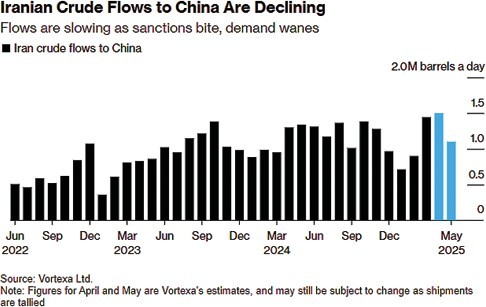
    China Oil Buy Drops, But Remains High

    China Oil Buy Drops, But Remains High

    Gov’t Ends Ban Importing Goods Made In Iran

    Minimum Wage is Boosted 45%

    Banks Must Keep More Money On Hand

    Banks Must Keep More Money On Hand

    Russian Says Iran Watermelons Unsafe

    Russian Says Iran Watermelons Unsafe

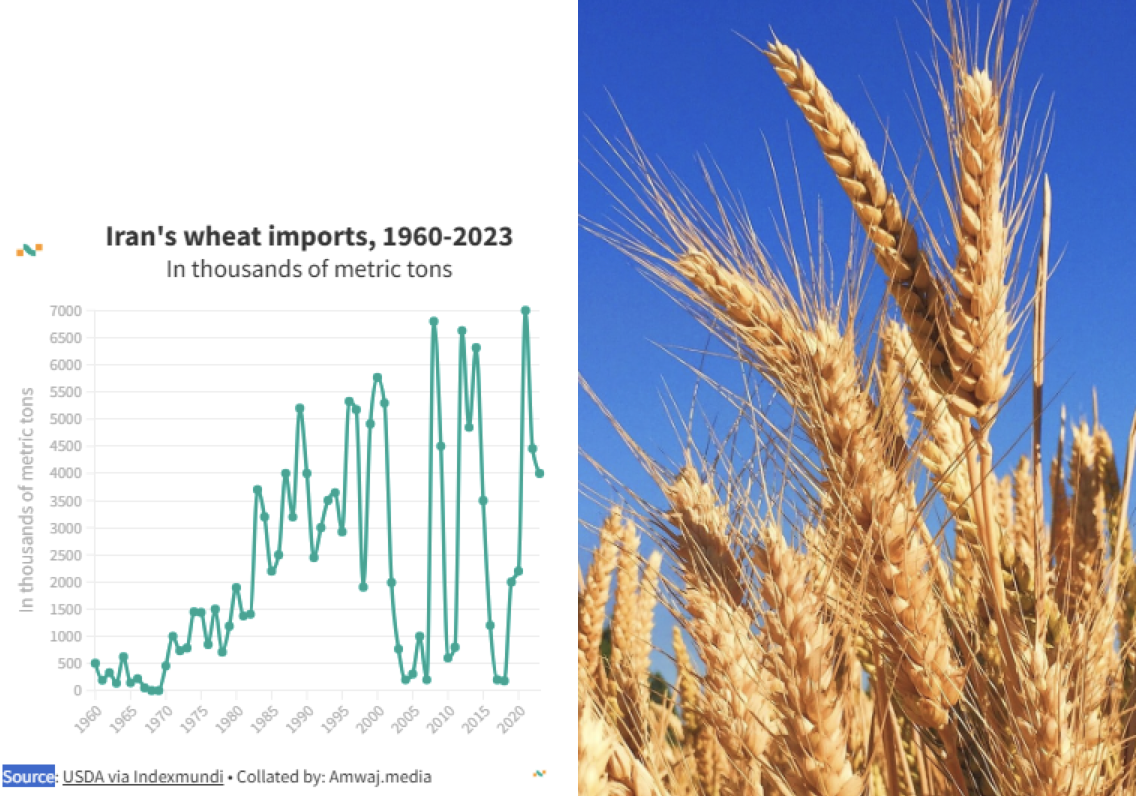
    Iran Not To Be Self-Sufficient In Wheat This Year

    Iran Not To Be Self-Sufficient In Wheat This Year

  • Tidbits and Morsels
  • Latest
    Hell Comes To A Pasdar Base North of Tehran

    Hell Comes To A Pasdar Base North of Tehran

    US Mail To Iran Is Suspended

    President Takes Time Off For Surgery

    President Takes Time Off For Surgery

    After Month Of Talks, Trump Decides He Wants No Enrichment

    The Lights Are Going Out All Over Iran

    Drone Attack That Killed 3 US Troops in Jordan Could Have Been Foiled

    Iranian-Canadians Reportedly Turned Away at US Border

    Iranian-Americans: an Account of Integration and Achievement

    Jamshid Myth

  • About Us
  • Advertising
  • Subscription
No Result
View All Result
  • Home
  • What’s the News
    • All
    • baygani
    Army Says It Makes Some Officers UN Peacekeepers

    Army Says It Makes Some Officers UN Peacekeepers

    Iran May Curry Favor With Egypt By Axing Street Name

    Iran May Curry Favor With Egypt By Axing Street Name

    Regime Barks Loudly At Dog Owners

    Regime Barks Loudly At Dog Owners

    Campaign To Rid Iran of Afghans Moves Into Trumpian High Gear

    Campaign To Rid Iran of Afghans Moves Into Trumpian High Gear

    Russia, China Interfere To Stunt Iran Nuclear Plan

    Russia, China Interfere To Stunt Iran Nuclear Plan

    Regime Hangs Convicted Killer of 7 in 2022 Protests

    Regime Hangs Convicted Killer of 7 in 2022 Protests

    Trump Kicks Trio Off Iran Issues For Being Too Pro-Israel

    Trump Kicks Trio Off Iran Issues For Being Too Pro-Israel

    Omid The Siberian Crane May Have Died

    Omid The Siberian Crane May Have Died

    Israel Built Drones In A Factory Set Near Tehran

    Israel Built Drones In A Factory Set Near Tehran

  • Diaspora
  • Economy
    Economist Says Biggest Problem For Iranian Economy is State Controls

    Economist Says Biggest Problem For Iranian Economy is State Controls

    US Stops Turkmen Gas Crossing Iran For Iraq

    US Stops Turkmen Gas Crossing Iran For Iraq

    For Umpteenth Time, Auto Privatization Again Killed

    For Umpteenth Time, Auto Privatization Again Killed

    China Oil Buy Drops, But Remains High

    China Oil Buy Drops, But Remains High

    Gov’t Ends Ban Importing Goods Made In Iran

    Minimum Wage is Boosted 45%

    Banks Must Keep More Money On Hand

    Banks Must Keep More Money On Hand

    Russian Says Iran Watermelons Unsafe

    Russian Says Iran Watermelons Unsafe

    Iran Not To Be Self-Sufficient In Wheat This Year

    Iran Not To Be Self-Sufficient In Wheat This Year

  • Tidbits and Morsels
  • Latest
    Hell Comes To A Pasdar Base North of Tehran

    Hell Comes To A Pasdar Base North of Tehran

    US Mail To Iran Is Suspended

    President Takes Time Off For Surgery

    President Takes Time Off For Surgery

    After Month Of Talks, Trump Decides He Wants No Enrichment

    The Lights Are Going Out All Over Iran

    Drone Attack That Killed 3 US Troops in Jordan Could Have Been Foiled

    Iranian-Canadians Reportedly Turned Away at US Border

    Iranian-Americans: an Account of Integration and Achievement

    Jamshid Myth

  • About Us
  • Advertising
  • Subscription
No Result
View All Result
Iran Times
No Result
View All Result

Sistani trying hand at politics, for a change

July 11, 2014

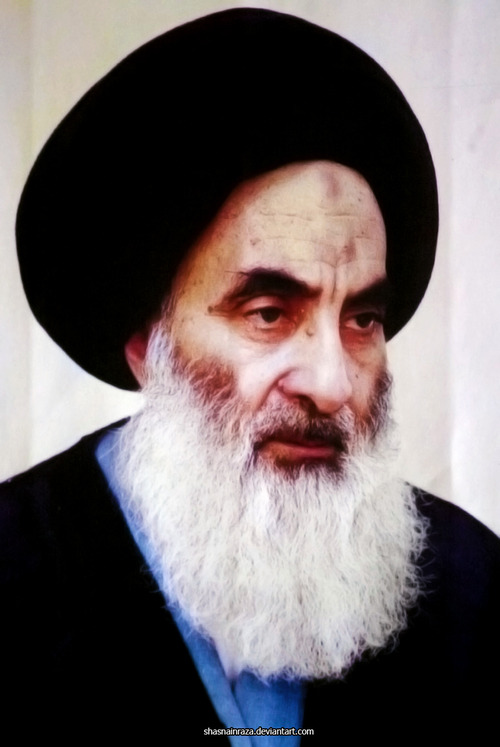
GRAND AYATOLLAH ALI SISTANI. . . born in Mashhad in 1930

Grand Ayatollah Ali Sistani, the seniormost Shiite cleric in Iraq—and some say in the world—is now intervening in politics in ways he has long avoided and even condemned in the past.

For three straight Friday sermons, Sistani has spoken out about Iraq’s broken political system and pushed politely but firmly for changes, diplomatically suggesting that it is time for Prime Minister Nuri al-Maliki to go and urging Iraqi Shiite politicians to work closely with Sunni and Kurdish politicians.

Sistani, as his name indicates, was born in Iran but has spent his adult life in Iraq.  He holds almost mythological stature to millions of followers in Iraq and beyond.  He is unchallenged as the senior Shiite cleric in Iraq and recognized by many as the senior Shiite cleric in the world—though that is certainly not accepted by the establishment clerics of the Islamic Republic.

Sistani has always rejected Ayatollah Ruhollah Khomeini’s political arguments for clerical rule.  Until now, he has made few political comments beyond urging Iraqi Shias to vote and Shiite politicians to rule with the tenets of Shiism in mind.

But this past month, that has changed.  Sistani has insisted that Shiite politicians choose a new government without delay—an order widely seen as geared to hastening the end of Prime Minister Nuri al-Maliki’s eight-year tenure.

Sistani has not, however, issued any direct commands endorsing or rejecting any potential candidates.  And he has not adopted the Khomeini dictum for clerical rule, though he is trying to throw his weight around more than in the past.

The cleric kicked off his newly assertive stance June 13 with a fatva for Iraqis to take up arms against the group that now calls itself the Islamic State.   The last time the Najaf clerical leadership issued such a call was in the 1920s when the British took over Iraq.  Sistani pointedly refused to issue any such call to oppose the US invasion of 2003 and subsequent occupation of Iraq.

Tens of thousands of men have heeded his call to arms, bolstering an army that has seen about a quarter of its combat units simply dissolve.

Next, Sistani appealed for an inclusive government of all Iraqis, a call widely seen as an implicit rebuke of Maliki—even by some of the premier’s supporters.

Lastly, Sistani called on the political blocs to choose a prime minister, president and speaker of parliament by July 1, a deadline that was not met, which points to clear limits on Sistani’s influence.

Sistani, who speaks Arabic with a distinct Persian accent, does not deliver his sermons himself.  They are read by an aide.

The three fatvas carry risks. Sunni leaders say Sistani’s call to arms inflamed the conflict. More broadly, the fatvas revive the old question of what role Najaf’s clerics should play in affairs of state.

“He gave a fatva the Shiites never had for 90 years or more. He will not retreat. He wants to have a role,” a Western diplomat with strong knowledge of the clerical establishment told the Reuters news agency, referring to the call to arms. “It would be seen as irresponsible for him to pull back after issuing such a fatva.”

Sistani is chancellor of the thousand-year-old Najaf seminary, the most senior of its four grand ayatollahs, and the most widely emulated in Iraq. To the millions who follow him, his Islamic legal opinions, or fatvas, are beyond question.

Mohammad Hussein al-Hakim, whose father is another of Najaf’s four top clerics, reaches deep into history to describe the threat Shiites now feel from the hardline Sunni Islamists spearheading the insurgency.

Two centuries ago, in 1806, puritanical Sunnis rampaged through the holy city of Karbala north of Najaf. Without the clerics’ intervention, Hakim said, history might have repeated itself.

“Now the capabilities are bigger, the destructive forces are stronger, and the destructive ideas are greater,” he said at the offices of a charity for orphans financed by his father.

He listed abuses and atrocities committed by the Islamic State group: tombs have been razed, Shiites murdered, mosques sacked. “They will leave no culture or values behind,” Hakim said. “Their behavior is monstrous.”

During interviews with Reuters, clerics also invoked the 7th century assassination of Imam Ali.

The greatest risk of Sistani’s activism, Sunni critics say, is that it may sharpen the sectarian edge of the conflict.

“Sistani now is ordering them to wear fatigues and fight Sunnis,” Sunni cleric Ahmed al-Kubaisi told Saudi Arabia-owned Al-Arabiya television last week.

Rifa al-Rifaie, a senior Sunni cleric, condemned the fatva, comparing it mockingly to Sistani’s earlier restraint. “Sistani, that lion, where was he when the Americans occupied Iraq?” he asked. “We have been treated unjustly, we have been attacked, our blood has been shed and our women have been raped.”

Supporters say Sistani’s call to arms was carefully phrased to call on all Iraqis, not just Shiites, and that it is the Islamic State that wants to make this an issue of sect.

Others argued the fatva actually reduced the chance of a bloodbath by encouraging people to fight only within the state-guided armed forces, rather than take matters in their own hands.
Previous Post

Reza Pahlavi leads meeting of new Iranian National Council

Next Post

10 Iranians on list of world’s top scientists

Related Posts

Army Says It Makes Some Officers UN Peacekeepers
What's the News

Army Says It Makes Some Officers UN Peacekeepers

Iran May Curry Favor With Egypt By Axing Street Name
What's the News

Iran May Curry Favor With Egypt By Axing Street Name

Regime Barks Loudly At Dog Owners
What's the News

Regime Barks Loudly At Dog Owners

Next Post

10 Iranians on list of world’s top scientists

Iran sends three warplanes to Baghdad

Iran sends three warplanes to Baghdad

Leave a Reply Cancel reply

Your email address will not be published. Required fields are marked *

  • About Us
  • Contact Us
  • Advertising
  • Subscription
  • Culture
  • Economy
Call us: +1 (202)-659-9868

© 1970-2025 Iran Times - ‬An‭ ‬Independent‭ ‬Newspaper

Welcome Back!

Login to your account below

Forgotten Password?

Retrieve your password

Please enter your username or email address to reset your password.

Log In
No Result
View All Result
  • Home
  • What’s the News
  • Diaspora
  • Economy
  • Tidbits and Morsels
  • Latest
  • About Us
  • Advertising
  • Subscription

© 1970-2025 Iran Times - ‬An‭ ‬Independent‭ ‬Newspaper

Are you sure want to unlock this post?
Unlock left : 0
Are you sure want to cancel subscription?
Go to mobile version