

November 22-2013
Iranian Foreign Minister Mohammad-Javad Zarif deftly displayed his diplomatic skills this week by taking one of the major issues off the table just before talks with the Big Six opened Wednesday.
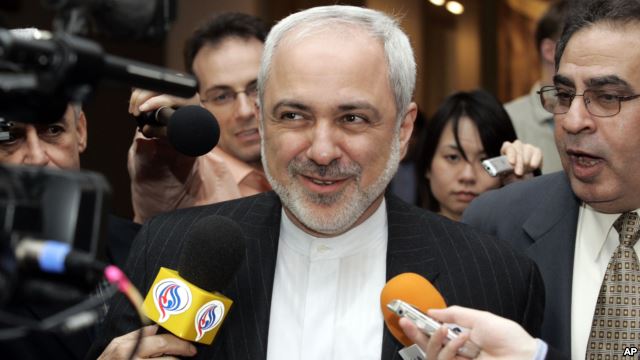
The issue of Iran’s right to enrich was boiling up as a potential game-stopper at the talks. Iranian officials have been demanding for years that the West recognize Iran’s right to enrich.
The United States has said for years that there is no right to enrich, and hasn’t looked like it was willing to concede for fear that would encourage other countries to start enrichment plants. In other words, Washington sees the issue as far broader than Iran.
France has recently made a major issue out of the alleged right to enrich and has loudly said it would not make that concession to Iran.
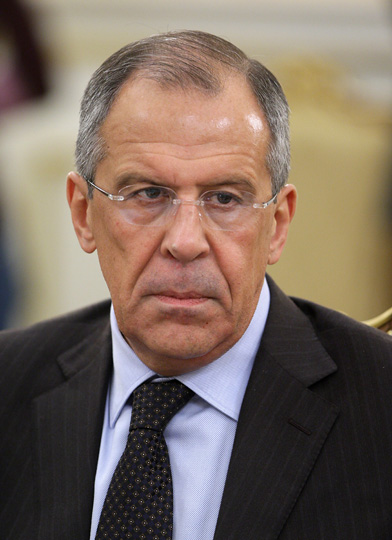
And Russian Foreign Minister Sergey Lavrov said many years ago that while Iran might have a right to enrich, but it lost that right in 2006 when the International Atomic Energy Agency (IAEA) unanimously ruled that the Islamic Republic had violated its commitments to the agency 16 times.
Zarif realized that pushing this issue was not likely to go anywhere and could sink Iran’s efforts to reach an agreement with the Big Six.
So, last week, Zarif announced that there was no need to waste any time putting any language in an agreement with the Big Six about the right to enrich since that right is already guaranteed in the Non-Proliferation Treaty (NPT). In just one sentence, Zarif pushed a potential deal-breaker off the table and out of the way.
He told the Iranian Students News Agency (ISNA), “We see the right to enrich as non-negotiable, but we also see no need for any new written recognition of it as a right. This is an inalienable right and all countries should respect it.”
Then he got to the heart of the US concern—but twisted it mightily—saying that Washing-ton’s opposition to enrichment rights for other countries “does not mean that they are opposing Iran’s enrichment.”
He appeared to mean that he expects to negotiate a deal that would allow Iran to enrich, although perhaps only up to 3.5 percent and perhaps with a cap on the number of centrifuges. He seemed to be saying that as long as the deal allows some enrichment, why should Iran get hung up on the “right to enrich.”
The NPT states that signatories have “the inalienable right … to develop research, production and use of nuclear energy for peaceful purposes.” Iran says that gives it the right to enrich. Washington says that clause says nothing about enrichment and, furthermore, makes all nuclear work conditional on avoiding military work.
Some of those who worked on the NPT drafting in the 1960s have said the problem is that the drafters didn’t realize the implications of enrichment. A country can take years to master enrichment technology. But once it has done so, it could take only months or even weeks to make the leap to a bomb. The NPT drafters did not think to include a restriction on enrichment that most countries now agree should have been included.
Meanwhile, more details seeped out about what happened at the last meeting of Iran and the Big Six earlier this month.
Russian Foreign Minister Lavrov admitted that he had goofed. He said he had agreed to a US draft to present to Iran. Then the Americans circulated the draft with a batch of French amendments “literally at the last moment, when we were about to leave Geneva.”
He told a news conference, “At first sight, the Russian delegation did not notice any significant problems in the proposed amendments.” Thus, Russia agreed to allow the amended draft to be put on table before Iran as a joint proposal of the Big Six.
But Zarif looked at the draft and balked.
In effect, Lavrov acknowledged a major professional failure in not recognizing the impact of the French changes. He blamed that on the rushed nature of things.
But Zarif earlier said the Big Six spent most of Friday and Saturday working on the re-draft, which did not make it sound rushed at all.