

January 10-2014

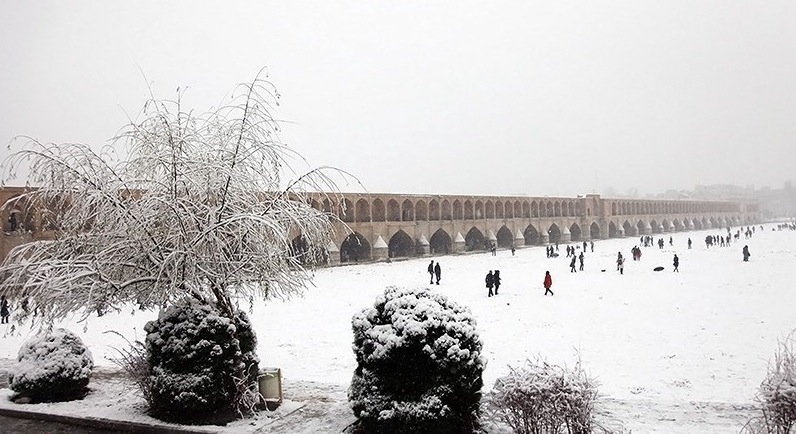
Harsh winter weather has not only descended over much of the United States this past week, it has also clamped down hard on much of Iran.
Fourteen of Iran’s 31 provinces were covered in snow Saturday while residents of 24 provinces or three-fourths of Iran were bundling up as they faced temperatures below freezing.
Tehran got its first snow of the winter season last Wednesday. It was enjoyed both for its beauty and for the fact that it washed out of the air the pollution that had been irking Tehranis.
There were no super-cold conditions such as many parts of the United States encountered, but the extent of the winter conditions was unusual for Iran.
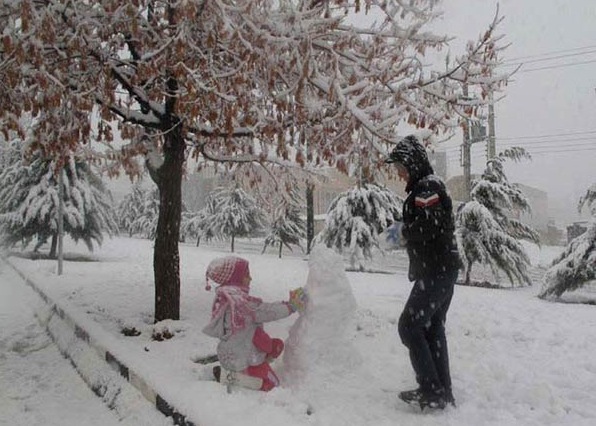
Temperatures in Tehran hit a low of -4 centigrade (25 Fahrenheit), nowhere near a record but still chilly for the capital.
On Monday, the coldest spot in the country was Sarab in East Azerbaijan province, where the mercury dipped to -21 centigrade (-6 Fahrenheit).
But not everywhere was shivering. In Chabahar on the Indian Ocean coast in Sistan va Baluchestan (literally on the opposite side of the country from Sarab), the temperature was a balmy 33 centigrade (91 Fahrenheit.)
But most Iranians weren’t anywhere near Chabahar. On just the first two days of the widespread snowfalls, the Red Crescent Society said it rescued 4,000 people trapped by the snows across the country last Wednesday and Thursday.
The countrywide chill started just a day after the National Iranian Gas Co. said it was running short of natural gas and called on every household to conserve gas. A month ago, the company said it had lots of gas and there would be no problems.
The gas company said it has slashed gas supplies to power plants and the petrochemical industry in order to keep up supplies to residences. This doesn’t mean power plants and petrochemical plants will have to shut down. They are supposed to have alternative supplies of liquid fuel they can switch to in such emergencies.
Conveniently, the government announced that the first part of Phase 12 of the South Pars gasfield came on stream last Friday, feeding another 10 million cubic meters a day of gas into the national pipeline system. The government said consumption was now at 600 million cubic meters a day, 30 million of which is being imported from Turkmenistan.