

President Pezeshkian has nominated a US-trained economist, Ali Madani zadeh, as the new Minister of Economic Affairs and Finance, three months after the impeachment and removal of the former minister, Abdolnasser Hemmati.
Madanizadeh’s American ties have prompted opposition to his nomination. But despite that, he was approved by the Majlis June 16 on a vote of 171 to 67 with eight abstentions. That meant he had the support of 69.5 percent of the deputies present, which is a very low approval rating compared to what Pezesh kian’s nominees got last fall. It would have put him fifth from the bottom back then when all the cabinet nominees were voted on.
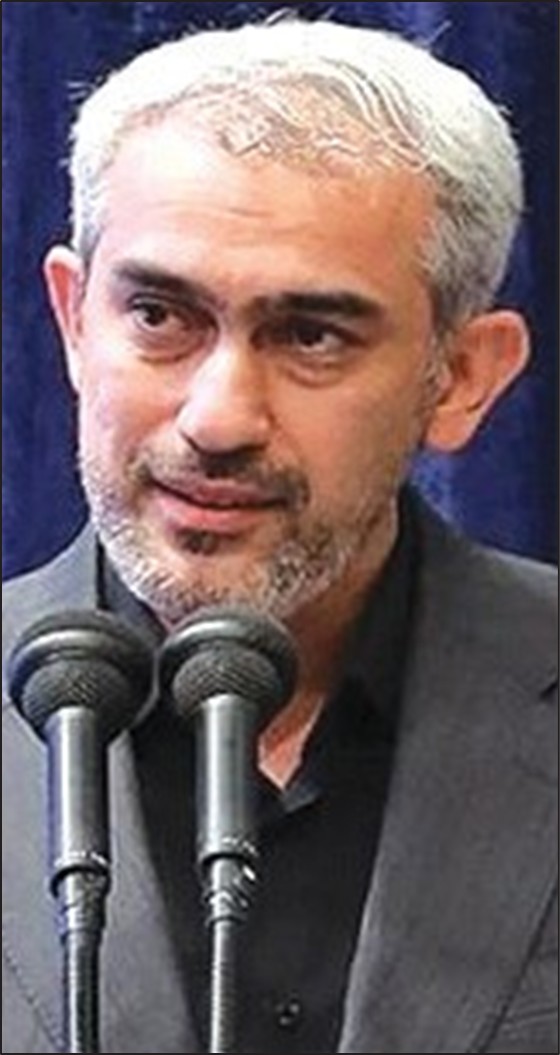
. . . Chicago doctorate
Under Iranian law, the government had a 90-day deadline to introduce a replacement. Initial efforts were focused on persuading Ali Tayyeb-nia — a minister under President Rohani credited with reducing inflation during his first term — to return to the role. However, those attempts were unsuccessful, paving the way for Madanizadeh, 43, a younger academic economist, to be nominated for the post.
Pezeshkian sent his name to the Majlis June 1 for approval.
Ultraconservatives, especially those from the Paydari Party, led a charge against his nomination, citing his links to the US as disqualifying.
One deputy, Sara Fallahi, even argued that Madanizadeh was unfit because his child was born in the US.
Another deputy, Hossain Samsami, told the Majlis, “I am not saying he is an infiltrator, but he received a scholarship from a Western influence network that recruits elite students, indoctrinating them before placing them in key positions in Iran to serve Western interests.” He didn’t say how a Western body could assign people to “key positions in Iran.”
Madanizadeh currently heads the School of Management and Economics at Sharif University of Technology, where he specializes in macroeconomics and computational economics. If confirmed, he will be the first Sharif University graduate to lead the ministry, a role historically dominated by University of Tehran alumni.
Born in 1982, Madanizadeh holds a bachelor’s and master’s degree in electrical engineering from Sharif University, a second master’s in applied mathematics from Stanford University, and a PhD in economics from the University of Chicago, which he completed in 2013 before returning to Iran to teach. The University of Chicago is famous as the leading center of conservative economists in the United States.
Inside Iran, among economists, Madanizadeh has long been recognized for his academic distinction, having won a bronze medal at the 2000 International Mathematical Olympiad when he was in high school.
A baptism of fire awaits the new minister, with the rial currently trading at 940,000 to the US dollar, down 60 percent from 12 months ago and the brain drain having siphoned wealth creators to the West. To make matters worse, the country’s coffers are being drained by decades of mismanagement, corruption and sanctions.
Based on past interviews, he is likely to advocate for fiscal discipline, greater transparency in public finances, and reforms to address off-budget imbalances that undermine the effectiveness of Central Bank policy.
The success of any program, however, will depend on his ability to secure political support and overcome resistance from entrenched interests, which oppose reforms that would better the national economy at the expense of entrenched interests. And the track record of previous ministers does not bode well for the American-trained academic.
He has said, “Monetary policy alone cannot succeed unless it is supported by reforms in the banking sector and measures to address both the budget and meta-budget deficits. It will take time, but we must start before the imbalances deepen.”
He cited Russia’s post-2015 banking reforms and Chile’s and Turkey’s monetary restructuring efforts as examples of how central banks gained policy credibility following institutional corrections. “We must first fix the rules of the game so that monetary policy has room to be effective,” he has said.