
















UN High Commissioner for Refugees Antonio Guterres told that, despite the voluminous foreign aid in Afghanistan, conditions are not yet right for the refugees to return home for the long term.
His agency will present an ambitious plan at a conference this month in Switzerland, asking for $1.5 billion in funds to help with the repatriation in order to ease the economic burden on Afghanistan’s neighbors who have long hosted the refugees.
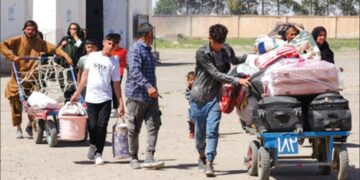
Millions of Afghans became refugees after the 1979 Soviet invasion of the country. Pakistan and Iran – which hosted 2 million and 3 million Afghans respectively – housed the largest population of refugees in the world. Today, 10 years after the fall of the Taliban, about 1.7 million Afghans still live in Pakistan, and 1 million in Iran.
“I think there are problems of governance, there are problems of economic development, there are problems of security,” Guterres said, explaining why only about half of the refugees have returned home.
“What is important to recognize is that a lot of investment has been made in Afghanistan but that investment has not been concentrated in creating conditions for people to feel they can go back, for that return to be sustainable,” he said.
Soon after he made those remarks, a NATO report was leaked, alleging that the Taliban felt confident they could take over the country after the US and its allies withdrew at the end of 2014.
Many Afghans who have returned to Afghanistan from the neighboring countries find themselves without jobs and embroiled in land disputes, because ownership remains murky after several regime changes and prolonged absence of many families from the country.
“It’s basically land allocation – it’s a crucial aspect – and then the basic infrastructure of education and health, and a minimum of conditions to allow people to be self-reliant and to generate their own income,” Guterres said.
Owing to insecurity and economic hardships, thousands of Afghans seek refuge abroad and apply for asylum in Western countries every year. According to UN statistics, Afghanistan is the largest source of unaccompanied minors seeking asylum.
Iran and Pakistan have both run repatriation programs in the past, but those programs have been halted for now. Pakistan has agreed to host Afghan refugees until the end of 2012 after a resurgence of violence along its border with Afghanistan hindered repatriation operations.
Guterres said that Pakistan and Iran had both expressed concerns about their ability to accommodate Afghan refugees, but he said he was confident neither country would expel the refugees against their will, although the Islamic Republic has repeatedly done just that.