








October 11-13
By Dennis Ross and David Makovsky
Although President Obama should head down the diplomatic road toward a nuclear deal with Iran, he must make exceedingly clear what he will not abide.
In relations between states, symbols can be a sign of change — but they can sometimes create false impressions. A handshake between President Barack Obama and Iranian President Hasan Rouhani at the U.N. General Assembly would have fallen into the latter category: those who are ready to anoint Rouhani as an Iranian Gorbachev would have seized on it as a sign of Iranian openness and readiness to break down barriers. Meanwhile, those who are convinced that Rouhani is just a savvier opponent than his in-your-face predecessor, Mahmoud Ahmadinejad, would have decried our readiness to be played by the Iranians.
The phone call that eventually occurred between the two leaders is a significant step, but does not offer the visual image of change. Moreover, the call likely emerged from the private discussion between Secretary of State John Kerry and Iranian Foreign Minister Javad Zarif, and each must have felt there was value in having it. Those wary of the Iranians will undoubtedly worry that the United States is effectively endorsing the symbols of change on the Iranian side without demanding requisite demonstrations of a change in policy. However, rather than trying to read too much into the meaning of a symbolic encounter — whether a phone call or handshake — Washington should focus instead on the reality of what Rouhani represents and shape its approach accordingly.
Unlike Gorbachev in the Soviet Union, the Iranian president is not the decision-maker in Iran. However, during his campaign, he ran against Iranian policies that produced the Islamic Republic’s international isolation and resulted in severe economic sanctions being imposed on it. Most significantly, Supreme Leader Ali Khamenei, the key decision-maker in Iran, allowed Rouhani to win the election and, at least at this point, appears to be backing his efforts at diplomacy. Now, the Obama administration must clarify for itself and others the concrete policy changes that will be necessary for Rouhani to achieve the detente he apparently seeks — and what advances in Iran’s nuclear program would represent an intolerable threat to the United States.
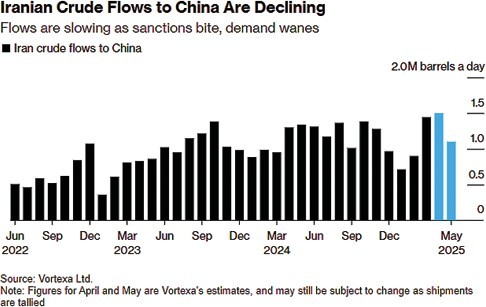
Rouhani has been clear about the high cost of the international sanctions and the need to get them lifted or relaxed. Upon assuming office, he declared that the economy was in even worse shape than he thought — a fact that came as no surprise to the Iranian public.
Economic pressures have given Tehran an incentive to resolve the international impasse over its nuclear program. But it cannot gain the economic relief it seeks unless it is willing to take meaningful steps to prove to the international community that its sole aim is the production of civilian nuclear power. Soothing words and smiles will not provide such reassurance; only tangible steps that remove Iran’s break-out capability — a verifiable method that guarantees early detection of any effort to move from reactor-grade to weapons-grade enriched uranium — can do so. This is almost certainly the position taken by both Obama and Congress.
Rouhani’s own speech at the United Nations emphasized Iran’s right to enrichment and gave little indication that Iran is prepared to alter its nuclear program. The Iranian president did, however, respond to Obama’s remarks by saying that “we can arrive at a framework to manage our differences.” There is only one way to know if that is true, of course, and that is to test it.
Once talks get under way — whether in the P5+1 format or in a bilateral setting — the United States will be able to probe to see if Iran is prepared for tangible or cosmetic change. The Obama administration should not rule out the possibility that there may be a potential convergence between its interest in stopping the Iranian nuclear program and Tehran’s sense of urgency in lifting the most hard-hitting economic sanctions. If so, this argues for an end-game nuclear deal, not a more limited agreement.
Rouhani clearly needs to have the sanctions removed as quickly as possible, and a limited deal won’t accomplish that. In his meeting with the P5+1 ministers, Zarif spoke about an agreement that would be fully implemented within one year, meaning he clearly wants the sanctions to be lifted in that time. Only a more comprehensive understanding could lead to major sanctions relief and provide the administration with what it requires — a roll back of the Iranian nuclear program that provides the United States with a high degree of confidence that the Iranians cannot cheat and produce a break-out capability at a time of their choosing.
To produce such a deal, the United States will need to be clearer with the Iranians about the threshold that it will not let their nuclear program cross. Obama has repeatedly said that an Iranian nuclear weapon threatens vital U.S. interests, as it could spur a regional nuclear arms race in the Middle East and threaten the fabric of the international non-proliferation regime. But he needs to make sure that his repeated public commitment to prevent Iran from obtaining a nuclear bomb does not lose its meaning. The pace and scope of Iran’s nuclear program — with the installation of a new generation of centrifuges and ever more accumulated enriched uranium — creates precisely such a risk in the coming months.
It is not enough for the United States to say that this line is an Iranian nuclear weapon, since this would enable Iran to develop a threshold nuclear capability that is just a few turns-of-the-screw away from a weapon. Providing greater clarity of the point at which Iran’s nuclear infrastructure would begin to threaten America’s ability to fulfill its objective of prevention is important in ensuring that neither Iran nor others misjudge what would trigger an American strike.
Interestingly, Iran has already shown it is not oblivious to thresholds. It has avoided surpassing the threshold of 240 kilograms of 20 percent enriched uranium that Israeli Prime Minister Benjamin Netanyahu explicitly drew in his U.N. General Assembly speech last year.
That said, the American threshold does not need to be defined publicly. The United States should not needlessly back the Iranians or itself into a corner. However, the Iranians, the Israelis, and the other members of the P5+1 should know with greater specificity the limits of what the Obama administration will tolerate with Iran’s nuclear program. As Obama just said at the United Nations in the context of the Syrian crisis, only the credible threat of force has given diplomacy a chance for success.
Moreover, the Iran issue is being viewed through the lens of the ongoing Syria crisis. Amid doubts that the U.S.-Russian deal will truly lead Damascus to completely turn over its chemical weapon stockpiles, observers in Israel and elsewhere in the Middle East have interpreted the initiative as evidence that the American public is too war-fatigued to be counted on to back a U.S. strike against Iran’s nuclear program should diplomacy fail. And as long as confidence in the United States is flagging and Israel feels it is on its own, the chances of an Israeli strike increase.
Clearly, everyone should prefer a diplomatic solution with Iran. Obama’s best chance to obtain that diplomatic breakthrough is through clarity — by demonstrating to Rouhani what he can live with and what he cannot abide. Clarity will also help dispel misconceptions in the Middle East about America’s resolve.
The United States should not be afraid to lift the requisite economic sanctions, if Iran comes through with its part of the bargain. The Iranian position in the talks will make it clear soon enough whether it is sincere about reaching a deal, or whether Iran is only willing to make cosmetic adjustments. But in the bid to divine Rouhani’s mind, we first have to know our own.
Ambassador Dennis Ross is counselor at The Washington Institute and former special assistant to President Obama. David Makovsky is the Ziegler Distinguished Fellow and director of the Project on the Middle East Peace Process at the Institute.