







• About Us
  • Subscription
  • Contact Us
Tuesday, March 10, 2026
  • Login
Iran Times
  • Home
  • What’s the News
    • All
    • baygani
    Army Says It Makes Some Officers UN Peacekeepers

    Army Says It Makes Some Officers UN Peacekeepers

    Iran May Curry Favor With Egypt By Axing Street Name

    Iran May Curry Favor With Egypt By Axing Street Name

    Regime Barks Loudly At Dog Owners

    Regime Barks Loudly At Dog Owners

    Campaign To Rid Iran of Afghans Moves Into Trumpian High Gear

    Campaign To Rid Iran of Afghans Moves Into Trumpian High Gear

    Russia, China Interfere To Stunt Iran Nuclear Plan

    Russia, China Interfere To Stunt Iran Nuclear Plan

    Regime Hangs Convicted Killer of 7 in 2022 Protests

    Regime Hangs Convicted Killer of 7 in 2022 Protests

    Trump Kicks Trio Off Iran Issues For Being Too Pro-Israel

    Trump Kicks Trio Off Iran Issues For Being Too Pro-Israel

    Omid The Siberian Crane May Have Died

    Omid The Siberian Crane May Have Died

    Israel Built Drones In A Factory Set Near Tehran

    Israel Built Drones In A Factory Set Near Tehran

  • Diaspora
  • Economy
    Economist Says Biggest Problem For Iranian Economy is State Controls

    Economist Says Biggest Problem For Iranian Economy is State Controls

    US Stops Turkmen Gas Crossing Iran For Iraq

    US Stops Turkmen Gas Crossing Iran For Iraq

    For Umpteenth Time, Auto Privatization Again Killed

    For Umpteenth Time, Auto Privatization Again Killed

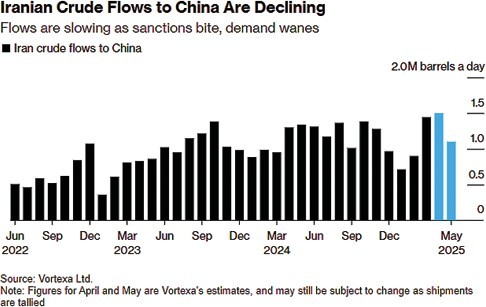
    China Oil Buy Drops, But Remains High

    China Oil Buy Drops, But Remains High

    Gov’t Ends Ban Importing Goods Made In Iran

    Minimum Wage is Boosted 45%

    Banks Must Keep More Money On Hand

    Banks Must Keep More Money On Hand

    Russian Says Iran Watermelons Unsafe

    Russian Says Iran Watermelons Unsafe

    Iran Not To Be Self-Sufficient In Wheat This Year

    Iran Not To Be Self-Sufficient In Wheat This Year

  • Tidbits and Morsels
  • Latest
    Hell Comes To A Pasdar Base North of Tehran

    Hell Comes To A Pasdar Base North of Tehran

    US Mail To Iran Is Suspended

    President Takes Time Off For Surgery

    President Takes Time Off For Surgery

    After Month Of Talks, Trump Decides He Wants No Enrichment

    The Lights Are Going Out All Over Iran

    Drone Attack That Killed 3 US Troops in Jordan Could Have Been Foiled

    Iranian-Canadians Reportedly Turned Away at US Border

    Iranian-Americans: an Account of Integration and Achievement

    Jamshid Myth

  • About Us
  • Advertising
  • Subscription
No Result
View All Result
  • Home
  • What’s the News
    • All
    • baygani
    Army Says It Makes Some Officers UN Peacekeepers

    Army Says It Makes Some Officers UN Peacekeepers

    Iran May Curry Favor With Egypt By Axing Street Name

    Iran May Curry Favor With Egypt By Axing Street Name

    Regime Barks Loudly At Dog Owners

    Regime Barks Loudly At Dog Owners

    Campaign To Rid Iran of Afghans Moves Into Trumpian High Gear

    Campaign To Rid Iran of Afghans Moves Into Trumpian High Gear

    Russia, China Interfere To Stunt Iran Nuclear Plan

    Russia, China Interfere To Stunt Iran Nuclear Plan

    Regime Hangs Convicted Killer of 7 in 2022 Protests

    Regime Hangs Convicted Killer of 7 in 2022 Protests

    Trump Kicks Trio Off Iran Issues For Being Too Pro-Israel

    Trump Kicks Trio Off Iran Issues For Being Too Pro-Israel

    Omid The Siberian Crane May Have Died

    Omid The Siberian Crane May Have Died

    Israel Built Drones In A Factory Set Near Tehran

    Israel Built Drones In A Factory Set Near Tehran

  • Diaspora
  • Economy
    Economist Says Biggest Problem For Iranian Economy is State Controls

    Economist Says Biggest Problem For Iranian Economy is State Controls

    US Stops Turkmen Gas Crossing Iran For Iraq

    US Stops Turkmen Gas Crossing Iran For Iraq

    For Umpteenth Time, Auto Privatization Again Killed

    For Umpteenth Time, Auto Privatization Again Killed

    China Oil Buy Drops, But Remains High

    China Oil Buy Drops, But Remains High

    Gov’t Ends Ban Importing Goods Made In Iran

    Minimum Wage is Boosted 45%

    Banks Must Keep More Money On Hand

    Banks Must Keep More Money On Hand

    Russian Says Iran Watermelons Unsafe

    Russian Says Iran Watermelons Unsafe

    Iran Not To Be Self-Sufficient In Wheat This Year

    Iran Not To Be Self-Sufficient In Wheat This Year

  • Tidbits and Morsels
  • Latest
    Hell Comes To A Pasdar Base North of Tehran

    Hell Comes To A Pasdar Base North of Tehran

    US Mail To Iran Is Suspended

    President Takes Time Off For Surgery

    President Takes Time Off For Surgery

    After Month Of Talks, Trump Decides He Wants No Enrichment

    The Lights Are Going Out All Over Iran

    Drone Attack That Killed 3 US Troops in Jordan Could Have Been Foiled

    Iranian-Canadians Reportedly Turned Away at US Border

    Iranian-Americans: an Account of Integration and Achievement

    Jamshid Myth

  • About Us
  • Advertising
  • Subscription
No Result
View All Result
Iran Times
No Result
View All Result

Syria’s lessons for the Iran nuclear talks

September 27-2013

As the UN Seurity Council grapples with getting control of Syria’s chemical weapons, two meetings in New York this week will draw considerable attention in the subcontinent and the world.

By Michael Singh

It is by now conventional wisdom that Iran emerged as a clear
winner in the U.S.-Russia diplomacy on Syria. To be sure, there
was plenty for Tehran to like about this particular foreign-policy misadventure: the United States’ hesitancy to enforce a red line or to use force, the West’s willingness to focus narrowly on Assad’s chemical weapons and ignore the broader threats posed by Assad and his allies, the public split between the United States and key regional allies like the Gulf Cooperation Council and Turkey, and the re-emergence of Russia, Iran’s ally, as a player in the region.

But it would be a mistake to conclude that the outcome is entirely benign for Iran.

Rouhani’s overarching objective in the nuclear talks, likely to resume soon, appears to be securing relief from economic sanctions at the minimum cost to Iran’s nuclear options. To that end, media reports indicate that Rouhani will propose that Iran retain most of its enrichment and reprocessing capabilities and be given relief from the two primary threats facing the regime — economic sanctions and military threats. In exchange, Iran will reportedly offer a range of transparency and verification measures, such as implementing the “Additional Protocol” to the Nuclear Non-Proliferation Treaty, thereby ostensibly expanding International Atomic Energy Agency (IAEA) inspectors’ access to Iranian nuclear sites.

The chemical weapons deal with Syria, however, complicates this approach. Barack Obama’s administration and many in Congress have asserted that the deal was made possible only due to the credible threat of force. This explanation is facile; the credibility of the president’s threat evaporated when it became clear that Congress would not authorize the use of force and the administration would not act absent that approval. In reality, having maneuvered himself into a corner through a deficient and undisciplined policy process, the president had little choice but to accept the Russian gambit.

Ironically, this collapse of credibility on Syria may prompt an effort to reinforce U.S. credibility on Iran. Because the alternative explanations of its behavior are so unpalatable, the Obama administration is now committed to the principle that credible threats of force facilitate diplomatic breakthroughs. And the administration’s partners, from Congress to overseas allies, may well be eager to cooperate in any effort to bolster the credibility of U.S. military warnings to Iran, having themselves proven reluctant to endorse force against Syria.

Furthermore, the success of the Syria agreement hinges upon Assad’s cooperation with weapons inspectors, just as any nuclear deal with Iran will depend on Tehran’s facilitation of IAEA inspections.

But Assad — who until just days ago denied having a chemical weapons program, just as Iran denies having a nuclear weapons program — is far more likely to obstruct the inspectors, and Moscow is likely to abet him. Assad has consistently failed to follow through with his promises or live up to international agreements, and he will likely try to retain some of his chemical weapons as insurance against a still-raging uprising.

Thus, the inspections regime for Syria, by virtue of its timing and Iran’s close alliance with Assad, will inevitably be seen as a test case in the value of transparency measures in addressing threats of weapons of mass destruction and building diplomatic confidence. Syrian misbehavior will not just sour Washington and its allies on the Syria deal, but should also make the Obama administration wary of the value of monitoring and verification as substitutes for farther-reaching limits on Iranian nuclear work. Rouhani would surely rather look elsewhere for an apotheosis of compliance.

Finally, Syria is a case study in a tactical success that is nevertheless a strategic setback. Even if Assad gives up his chemical weapons against all expectations, his prospects for not only surviving the uprising but strengthening his grip on power — despite Obama and many other world leaders insisting he must go — have increased.

Similarly, Rouhani’s great achievement during his first stint as Iran’s nuclear negotiator was to deflect serious consequences in the wake of the exposure of Iran’s theretofore-secret enrichment and reprocessing-related activities, at the low cost of their suspension until the threat of U.S. attack had subsided in 2005. Rouhani has once again been called upon to get Iran out of a jam, and can be expected — like Assad, and like himself a decade ago — to try to secure victory out of retreat.

For the Obama administration, Syria must serve as a wake-up call as the administration enters a more serious phase of nuclear diplomacy with Iran. The White House has — quite inadvertently — partnered with Congress to forge a policy combining heavy pressure and repeated outreach that may now have Iran considering changing course. But until Tehran does so fully and sustainably, the United States must not just continue its diplomacy but also maintain and reinforce the pressure that has gotten it this far, lest its tactical gains give way to strategic failure.

Michael Singh is managing director of The Washington Institute.

Previous Post

plutonium production

Next Post

In heavy water —Iran’s potential plutonium production

Related Posts

Can Israel Destroy Iran’s Nuclear Program?
Commentary

Can Israel Destroy Iran’s Nuclear Program?

The Right Path to Regime Change In Iran
Commentary

The Right Path to Regime Change In Iran

Commentary

Trump has Achance to Strike a Deal with Iran

Next Post

In heavy water —Iran’s potential plutonium production

Regime freeing political prisoners

Regime freeing political prisoners

Leave a Reply Cancel reply

Your email address will not be published. Required fields are marked *

  • About Us
  • Contact Us
  • Advertising
  • Subscription
  • Culture
  • Economy
Call us: +1 (202)-659-9868

© 1970-2025 Iran Times - ‬An‭ ‬Independent‭ ‬Newspaper

Welcome Back!

Login to your account below

Forgotten Password?

Retrieve your password

Please enter your username or email address to reset your password.

Log In
No Result
View All Result
  • Home
  • What’s the News
  • Diaspora
  • Economy
  • Tidbits and Morsels
  • Latest
  • About Us
  • Advertising
  • Subscription

© 1970-2025 Iran Times - ‬An‭ ‬Independent‭ ‬Newspaper

Are you sure want to unlock this post?
Unlock left : 0
Are you sure want to cancel subscription?
Go to mobile version