















The Islamic Republic has often threatened to attack Arab oil facilities if the United States launches any attack on Iran. The clear goal has been to encourage the Arabs to deter the Americans from any attack.
But the new study says Iran’s threat is hollow. In fact, it even says the Saudis should stop spending money on missile defense programs. The study says the threat is so small that defense is just a waste of money.
 The study was published in the summer issue of International Security magazine, an academic quarterly published by the Massachusetts Institute of Technology (MIT). The article is titled, “A Crude Threat: The Limits of an Iranian Missile Campaign against Saudi Arabian Oil.” It was written by Joshua R. Itzko-witz Shifrinson and Miranda Priebe, both MIT doctoral candidates.
The gist of the article is that Iran’s missiles are not accurate enough to take out the small targets represented by oil installations unless huge numbers were fired at the targets—and Iran does not have anywhere near the numbers to do that.
The authors says any attacker would want to target a high value target—that is, a point in the oil industry whose loss would stop a considerable proportion of production and not be easily repairable.
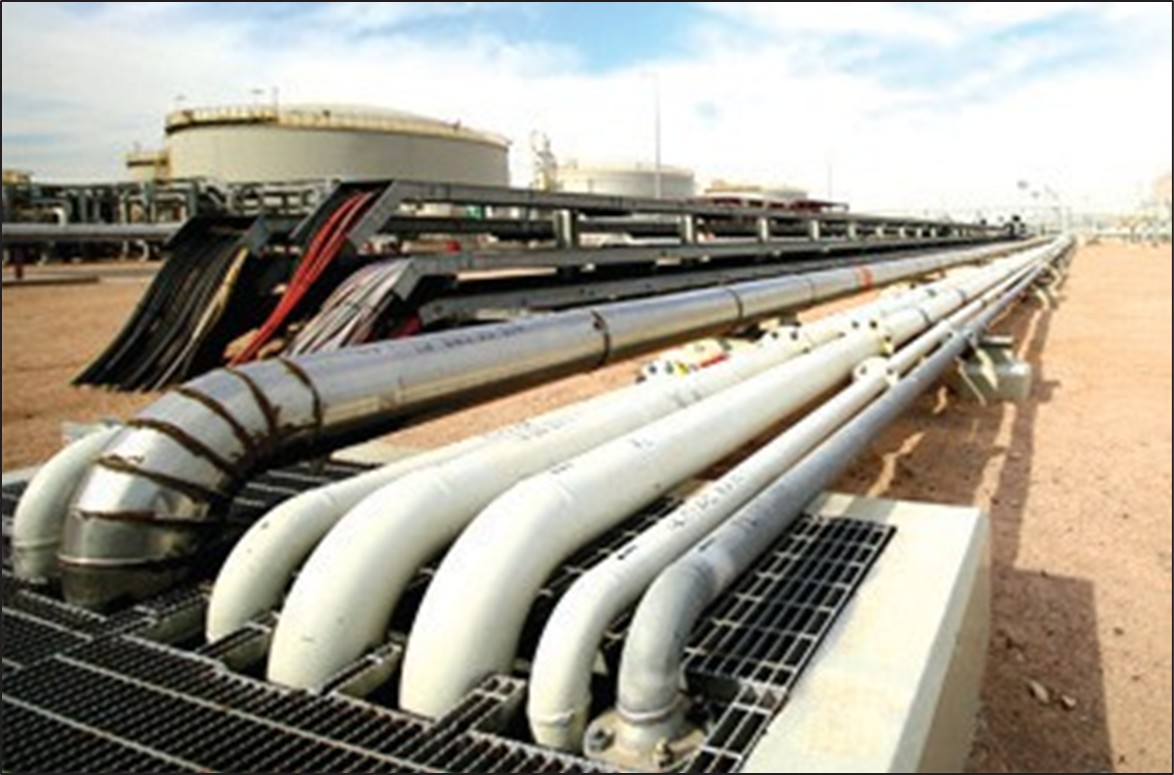
The authors says the best target for an attacker would be the Saudi crude stabilization facilities, which are used to remove impurities in order to make a product suitable for export. They note that these facilities are large and concentrated in a few small areas, making them easier to target. Many of them are unique Saudi designs so that they cannot easily be repaired with equipment off the shelf. They calculate that the elimination of all the stabilization facilities in Saudi Arabia would reduce exports by almost 75 percent, limiting Saudi exports to naturally sweet oil that lacks impurities and doesn’t have to go through the stabilization facilities.
The authors assume that in any attack Iran uses its entire missile inventory and that none of its missiles are duds. They used the highest estimates they found for Iran’s missile inventory: 400 Shahab-1s, 450 Shahab-2s and 150 Fateh A-110s—a total of 1,000 missiles.
They calculate that it would take 15 pounds per square inch of overpressure to rupture the stabilization towers. The Shahab-1 can produce such pressure as long as it explodes within 30 meters of a tower. But most of Iran’s missiles would explode farther away, given the poor accuracy of the missiles.
The authors then calculate that Iran would have to fire 1,376 missiles—more than Iran now possesses—at the 18 Saudi towers to have a 75 percent chance of destroying even one tower! And this assumes that the US Patriot anti-missile missiles assigned to Saudi Arabia are not used at all.
Furthermore, if the Saudis invested in hardening their towers so overpressure would not destroy them and a direct hit would be needed, then Iran would have to fire more than a million missiles to knock the towers out.
On top of that, even if all the stabilization towers were put out of business, the Saudis would still be able to produce 5.6 million barrels a day of oil that does not have to go though those stabilization towers.
The biggest problem for any attacker is the fact that Saudi Arabia has so much excess capacity. The stabilization towers can process 13 million barrels a day, but the Saudis produce less than half of that. So, even if Iran managed somehow to destroy half of the towers, Saudi oil production could still continue at the current rate.
The analysts acknowledge that they are basing their calculations on the limited accuracy assumed for Iranian missiles while Iranian scientists are understood to be seeking greater accuracy.
But they say the Saudis could offset greater Iranian missile accuracy very cheaply simply by building more stabilization towers or hardening the existing towers.
The study concludes: “Our research indicates that threats to regional oil production are overblown. By implication, the United States may be able to reduce its military commitment to the region.”