

June 20, 2025
The prosecutor in Esfahan has announced he will prosecute people found walking dogs in the city. That has set off a raft of copycat actions all over Iran so that so far dog owners in at least 21 cities face the threat of prosecution.
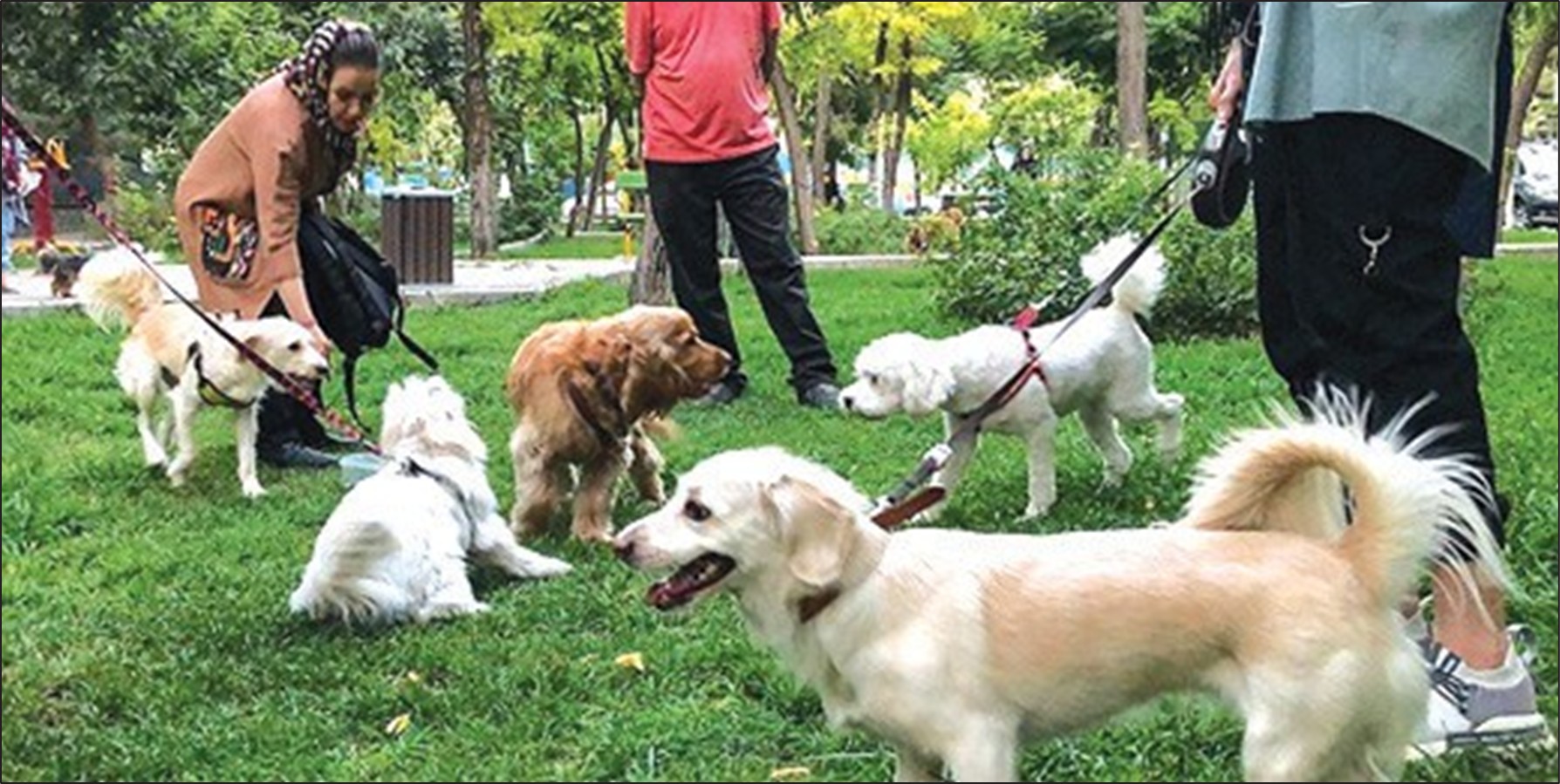
just an historical picture from the okden days.
The Majlis has contemplated a ban on owning dogs as pets, but has always backed away from any such action. The prosecutors are acting on their own, citing the need for them to act in the interest of health and safety.
According to news reports, the cities with dog-hating prosecutors are: Esfahan, Mashhad, Qom, Ahvaz, Urumiyeh, Khorramabad, Rey, Kerman, Qazvin, Hamadan, Kashmar, Khalkhal, Ilam, Yazd, Robat Karim, Golestan in Tehran Province, Lavasanat in Tehran province, Borujerd, Tabriz, Gorgan and Mallard in Tehran province.
The Tehran prosecutor has been silent so far. But the traffic police chief says he will arrest people walking dogs. However, the city police remained silent. A 2019 Tehran police edict banned dogs from public spaces in the capital, but has been little enforced.
Mohammad Musavian, the Esfahan city prosecutor, kicked things off May 31 with his announcement of his pet crackdown policy. That sparked the other city prosecutors to act on succeeding days.
Musavian said, “Dog walking is an example of violating public rights and is considered a threat to health, comfort and the peace of citizens.”
He ordered the municipality to erect signs in parks and along streets announcing the prohibition on walking dogs in any public area.
He said, “The phenomenon of walking dogs in public streets or carrying them in vehicles is against religious and social values.”
Dogs are commonly viewed as unclean in Islamic communities. Dogs are commonly found as pets and work animals in Iran’s rural villages. But it is only in recent decades that a large number of urban families have chosen to have dogs as pets. This has offended many in the clergy. But it has also offended revolutionary hardliners who see dog ownership as an expression of Westernization and of opposition to the Islamic Republic.
A number of city prosecutors also ordered that cars found with dogs inside be confiscated along with the dogs.
Ali Hassanvard, prosecutor in Khorramabad, faced questions about his authority to ban dog walking. He gave a detailed response.
“Based on the principles and articles of the law, Article 40 of the Constitution of the Islamic Republic of Iran, which prohibits harming others and violating public interests in the exercise of individual rights, Article 2 of the Constitution, which requires the Islamic Republic system to adhere to religious and cultural values of an Islamic society, Article 688 of the Islamic Penal Code, which criminalizes any act that threatens public health, Articles 506 and 522 of the Islamic Penal Code approved in 2013, regarding criminal liability resulting from negligence leading to physical injury or harm, and Article 5, Clause 15, of the Municipalities Law, regarding the municipality’s duty to prevent matters that are detrimental to health.”
Mehdi Jahanshiri, prosecutor in Mallard, said, “Field surveys and public reports show that the presence of dogs in parks and public places causes fear and anxiety in children and deprives them of their natural right to play and have safe fun.”
Some commentators said the action showed a widespread misunderstanding of what law is, with prosecutors thinking they can enforce a policy that the Majlis has refused to approve.
Some women activists saw misogyny in the anti-dog movement. They argued that many women feel unsafe alone on city streets and that walking with a dog gives them a feeling of security.
Others had a different perspective. They noted the herds of wild dogs found around most Iranian cities and asked why the authorities did little or nothing about them but were preparing to crack down on leashed dogs. The police in many cities have periodically launched campaigns against wild dogs, but those campaigns have usually ended quickly when the public explodes at police for setting out poison or even shooting dogs in public areas.
In 2019, Supreme Leader Ali Khamenehi issued a fatwa or religious edict saying that a dog’s saliva or hair would render anything touched unclean. “Prayer is invalid in the presence of dog hair,” he ruled.