

June 20, 2025
An Iranian woman injured while working in Quebec has found out the hard way that she is not covered by the province’s medical insurance when she was given a bill for 1,200 Canadian dollars (US$840).
When a metal ladder fell and hit Somayeh Ahmadi seddigh in the head at work in February, she was dizzy, nauseous and had trouble standing up. A colleague drove her to the hospital in Quebec City, but when she arrived, she was told it would cost 1,200 Canadian dollars to see a doctor because she did not have a provincial health-care card.
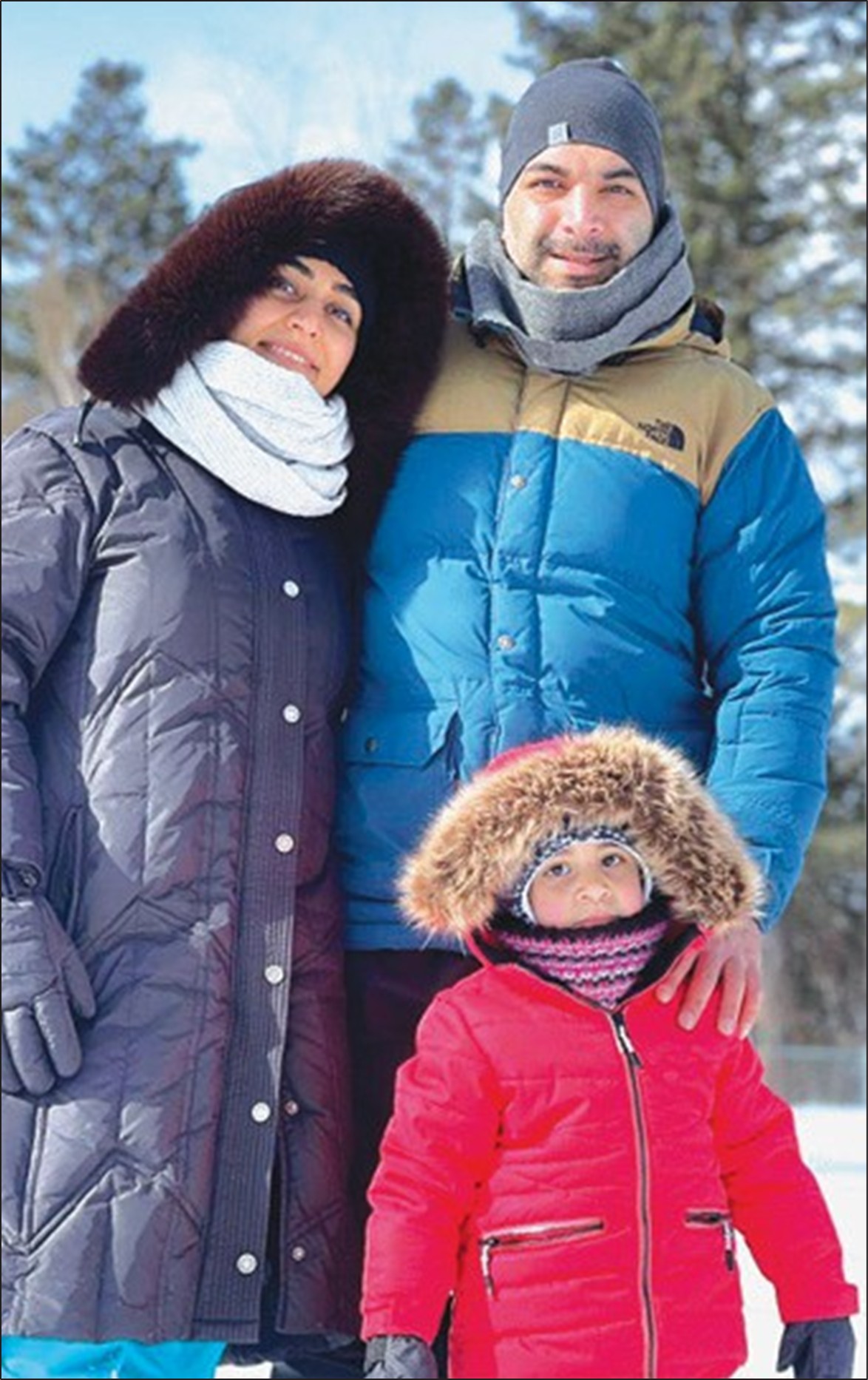
with her husband, Ardalan Alemzadeh, and their
daughter, Celine, against the rigors of a Quebec
winter.
She holds a work permit, which is valid for three years. But, in Quebec, this group of workers is not eligible for public health insurance coverage, known as RAMQ.
“It’s discrimination in my opinion,” said Ahmadiseddigh. “I think it’s not humane.”
After the Woman, Life, Freedom protests broke out in Iran in 2022, the Canadian government allowed Iranians, like Ahmadiseddigh, who came to Canada on a visitor visa, to apply for an open work permit, which could help them earn permanent residency.
At the end of 2024, nearly 11,000 Iranians had such work permits just in Quebec province, according to statistics from Immigration, Refugees and Citizenship Canada (IRCC).
Ahmadiseddigh moved to Quebec City with her husband and four-year-old daughter last year. She works and pays taxes in Quebec and takes French classes part time.
A few months ago, she qualified for supplemental health coverage through her job at Dollarama, but can’t take advantage of it because she has to have RAMQ to access it.
Friends who settled in other provinces have not had the same kind of challenges.
“I feel like I am falling behind,” she said.
She looked into private insurance, but it is too expensive and only intended for emergencies.
She and her husband were told to change their open work permit to a closed permit or apply for permanent residency, but that is not an easy option for newcomers, and it can take years to get permanent residency in Canada.
The hardship comes at a time when Quebec is re-assess ing its immigration policy as Quebecers are turning more hostile to immigrants, just as in the United States.
Francois Legault, Quebec’s premier, the equivalent of a state governor in the US, who has long maintained that cultural practices of immigrants, particularly from Muslim countries, pose a threat to Quebec’s values, has called on Ottawa to redistribute asylum seekers from Quebec to the other nine provinces.
“Maybe I chose the wrong place to immigrate,” said Ahmadiseddigh.
After CBC Montreal placed a message on an Iranian chat group, dozens of Iranians reached out to share similar frustrations, including people who have delayed starting a family because of the lack of health support for pregnancy and childbirth.
Marie-Claude Lacasse, a spokesperson for the health ministry, said, “People in Quebec with an open work permit are not sponsored by an employer and therefore have no ‘proof’ that they are not here for medical tourism, just like foreign students.”
Anyone with a work permit, whether open or closed, can apply for permanent residence. Once they obtain that status, and following a three-month waiting period, they will have access to the RAMQ, she said.
Ahmadiseddigh left Iran because she wanted a better life for her family. She hopes Quebec will reconsider to help make that a reality.