









• About Us
  • Subscription
  • Contact Us
Sunday, March 8, 2026
  • Login
Iran Times
  • Home
  • What’s the News
    • All
    • baygani
    Army Says It Makes Some Officers UN Peacekeepers

    Army Says It Makes Some Officers UN Peacekeepers

    Iran May Curry Favor With Egypt By Axing Street Name

    Iran May Curry Favor With Egypt By Axing Street Name

    Regime Barks Loudly At Dog Owners

    Regime Barks Loudly At Dog Owners

    Campaign To Rid Iran of Afghans Moves Into Trumpian High Gear

    Campaign To Rid Iran of Afghans Moves Into Trumpian High Gear

    Russia, China Interfere To Stunt Iran Nuclear Plan

    Russia, China Interfere To Stunt Iran Nuclear Plan

    Regime Hangs Convicted Killer of 7 in 2022 Protests

    Regime Hangs Convicted Killer of 7 in 2022 Protests

    Trump Kicks Trio Off Iran Issues For Being Too Pro-Israel

    Trump Kicks Trio Off Iran Issues For Being Too Pro-Israel

    Omid The Siberian Crane May Have Died

    Omid The Siberian Crane May Have Died

    Israel Built Drones In A Factory Set Near Tehran

    Israel Built Drones In A Factory Set Near Tehran

  • Diaspora
  • Economy
    Economist Says Biggest Problem For Iranian Economy is State Controls

    Economist Says Biggest Problem For Iranian Economy is State Controls

    US Stops Turkmen Gas Crossing Iran For Iraq

    US Stops Turkmen Gas Crossing Iran For Iraq

    For Umpteenth Time, Auto Privatization Again Killed

    For Umpteenth Time, Auto Privatization Again Killed

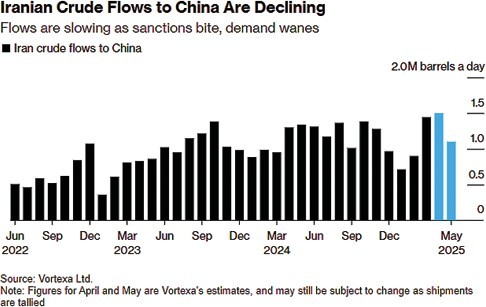
    China Oil Buy Drops, But Remains High

    China Oil Buy Drops, But Remains High

    Gov’t Ends Ban Importing Goods Made In Iran

    Minimum Wage is Boosted 45%

    Banks Must Keep More Money On Hand

    Banks Must Keep More Money On Hand

    Russian Says Iran Watermelons Unsafe

    Russian Says Iran Watermelons Unsafe

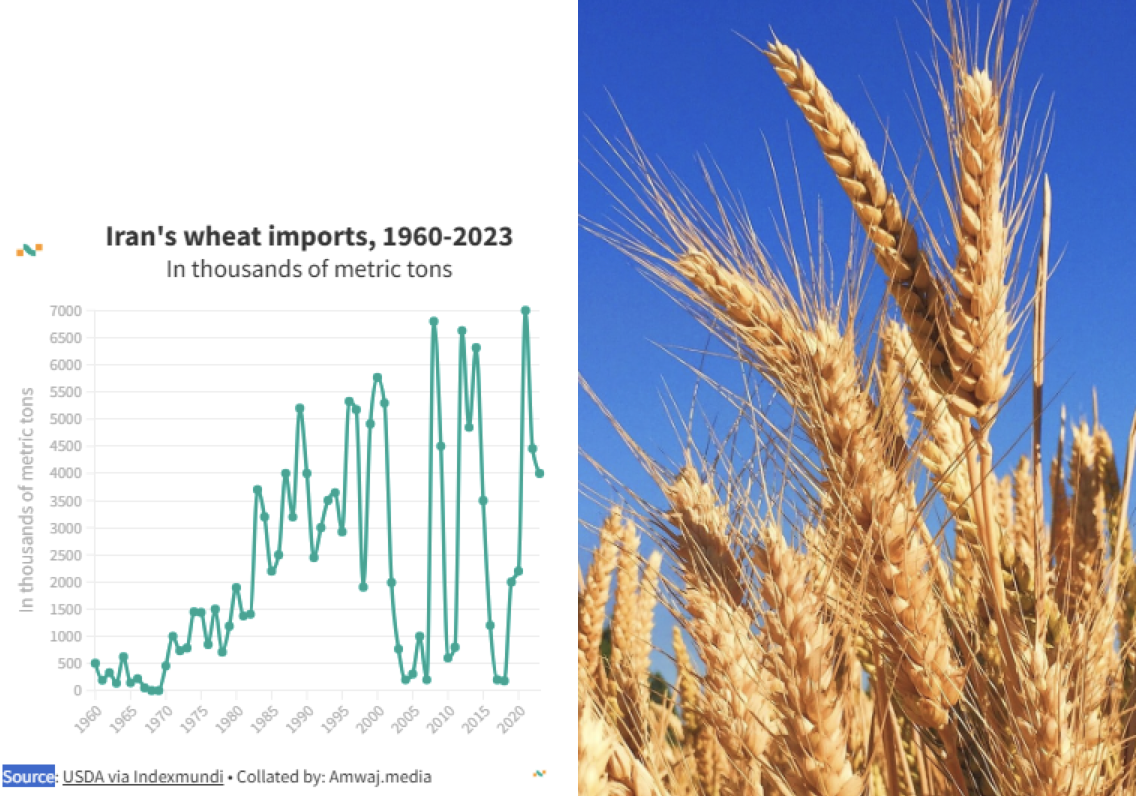
    Iran Not To Be Self-Sufficient In Wheat This Year

    Iran Not To Be Self-Sufficient In Wheat This Year

  • Tidbits and Morsels
  • Latest
    Hell Comes To A Pasdar Base North of Tehran

    Hell Comes To A Pasdar Base North of Tehran

    US Mail To Iran Is Suspended

    President Takes Time Off For Surgery

    President Takes Time Off For Surgery

    After Month Of Talks, Trump Decides He Wants No Enrichment

    The Lights Are Going Out All Over Iran

    Drone Attack That Killed 3 US Troops in Jordan Could Have Been Foiled

    Iranian-Canadians Reportedly Turned Away at US Border

    Iranian-Americans: an Account of Integration and Achievement

    Jamshid Myth

  • About Us
  • Advertising
  • Subscription
No Result
View All Result
  • Home
  • What’s the News
    • All
    • baygani
    Army Says It Makes Some Officers UN Peacekeepers

    Army Says It Makes Some Officers UN Peacekeepers

    Iran May Curry Favor With Egypt By Axing Street Name

    Iran May Curry Favor With Egypt By Axing Street Name

    Regime Barks Loudly At Dog Owners

    Regime Barks Loudly At Dog Owners

    Campaign To Rid Iran of Afghans Moves Into Trumpian High Gear

    Campaign To Rid Iran of Afghans Moves Into Trumpian High Gear

    Russia, China Interfere To Stunt Iran Nuclear Plan

    Russia, China Interfere To Stunt Iran Nuclear Plan

    Regime Hangs Convicted Killer of 7 in 2022 Protests

    Regime Hangs Convicted Killer of 7 in 2022 Protests

    Trump Kicks Trio Off Iran Issues For Being Too Pro-Israel

    Trump Kicks Trio Off Iran Issues For Being Too Pro-Israel

    Omid The Siberian Crane May Have Died

    Omid The Siberian Crane May Have Died

    Israel Built Drones In A Factory Set Near Tehran

    Israel Built Drones In A Factory Set Near Tehran

  • Diaspora
  • Economy
    Economist Says Biggest Problem For Iranian Economy is State Controls

    Economist Says Biggest Problem For Iranian Economy is State Controls

    US Stops Turkmen Gas Crossing Iran For Iraq

    US Stops Turkmen Gas Crossing Iran For Iraq

    For Umpteenth Time, Auto Privatization Again Killed

    For Umpteenth Time, Auto Privatization Again Killed

    China Oil Buy Drops, But Remains High

    China Oil Buy Drops, But Remains High

    Gov’t Ends Ban Importing Goods Made In Iran

    Minimum Wage is Boosted 45%

    Banks Must Keep More Money On Hand

    Banks Must Keep More Money On Hand

    Russian Says Iran Watermelons Unsafe

    Russian Says Iran Watermelons Unsafe

    Iran Not To Be Self-Sufficient In Wheat This Year

    Iran Not To Be Self-Sufficient In Wheat This Year

  • Tidbits and Morsels
  • Latest
    Hell Comes To A Pasdar Base North of Tehran

    Hell Comes To A Pasdar Base North of Tehran

    US Mail To Iran Is Suspended

    President Takes Time Off For Surgery

    President Takes Time Off For Surgery

    After Month Of Talks, Trump Decides He Wants No Enrichment

    The Lights Are Going Out All Over Iran

    Drone Attack That Killed 3 US Troops in Jordan Could Have Been Foiled

    Iranian-Canadians Reportedly Turned Away at US Border

    Iranian-Americans: an Account of Integration and Achievement

    Jamshid Myth

  • About Us
  • Advertising
  • Subscription
No Result
View All Result
Iran Times
No Result
View All Result

Economy started to improve before Rohani

different visionOctober-18-2013

by Djavad Salehi-Isfahani

The diplomatic push by Iranian President Hassan Rouhani to resolve the decade-long dispute over Iran’s nuclear program reached its zenith during his visit to New York in late September, exactly one year after Iran’s currency collapsed under the weight of US-led sanctions. Although the timing is largely accidental, the correlation between sanctions and Iran’s willingness to negotiate is not. These measures have clearly hurt Iran’s economy, and its leaders are searching for an agreement with the West that includes sanctions relief.

Much analysis of the reasons for Iran’s new conciliatory approach credits sanctions for the improved diplomatic prospects for reaching a deal. Where opinions differ is how to respond to Iran. Should the West begin with positive gestures and take steps to ease sanctions or tighten them to squeeze a better deal from an adversary in retreat. The question then becomes: whose side is time on?

As Vali Nasr argued forcefully in the New York Times last week, Tehran does not feel pressed for time on political grounds because it sees itself approaching new negotiations from a position of strength.

Only a few months ago, Iran concluded a landmark presidential election that brought to power a popular government much closer to the reformist camp than to the Supreme Leader, challenging the notion of the Islamic Republic as a political system in demise. The charm offensive in this case is an olive branch, not a white flag.

Those who believe that time is on the West’s side argue that Rouhani’s election is actually a sign of Iran’s desperation. They argue that Iran’s economy is in such dire circumstances that it has forced Ayatollah Ali Khamenei into a domestic compromise that makes an external one possible.

So how bad is the state of Iran’s economy, and will it collapse with more sanctions?

The “collapse” scenario, which at times excites US sanctions advocates into a frenzy like what we saw following the crash of the rial last October, is being revived as a way to dissuade the Obama administration from reaching a compromise with Iran too soon.

Iran’s economy is “already on the verge of collapse”, wrote the Times last week, failing to mention that it has been regarded as on that verge for quite some time. A Brookings report in 2009 called Iran’s economy “teetering”, when in fact it was one of the few countries in the world that was still growing after the Big Recession.

However, unlike political systems, economies do not collapse, they shrink. Economic activity in Iran declined by 2.9% last year (5.4% if you count oil activity) according to government figures, and unemployment is at historic levels, though not as bad as what we’re seeing in Greece or Spain.

If sanctions tighten, Iran’s economy will continue to slide for a year or two but will eventually reverse course. Per capita income will probably fall from about 20% below Turkey today to 30% below, but still more than 50% above that of Egypt. This doesn’t foreshadow a collapse as much as it does a slow adjustment to more difficult circumstances.

Positive steps to push Iran’s economy onto a recovery path were in fact taken in the last months of the Ahmadinejad administration and continue today. The rate of growth of Iran’s money supply and inflation started to fall before Rouhani took office. For the past three months, the average rate of inflation has been below 20% annually, about half of what it was in the months before.

The new economic team is also much more competent and looking in the right direction — to the private sector — for solutions to Iran’s economic problems.

Rouhani’s administration is the most business-friendly team to rule the Islamic Republic. The head of Iran’s Chamber of Commerce, Mohammad Nahavandian, is Rouhani’s chief of staff and the closest person to the president. The head of a private bank is also the governor of the Central Bank. Former president Hashemi Rafsanjani, whose men fill key posts in the new administration, encouraged the private sector to view Rouhani’s government as “family”.

Unemployment is approaching 20%, a record level, but will not surpass it. One reason is demography. For every person who entered retirement age in the last few years, 5 new people reached the working age. In the next few years this ratio will fall to 3, substantially reducing the pressure on the labor markets.

Future growth will also likely bring more jobs. After 2005, a large inflow of oil revenues opened a floodgate to cheap imports that hurt local production, causing jobless growth. Thanks to a more realistic value for the rial, the local production of most consumer goods has become more economical for local producers. The easing of sanctions, especially on the banking sector, would be of enormous help to these producers, but this will not be the game-changer.

In deciding how far they can push Iran, the P5+1 negotiating team should bear in mind another important fact about the political context in which the peace initiative of Iran’s new president is taking place. For Rouhani, reaching a compromise with the West is important, but not if it risks losing the support of his conservative rivals who are deeply suspicious of this process.

Rouhani sees his election as a historic opportunity to move Iran closer to a more pluralistic and tolerant society and not merely to settle the nuclear dispute. Forcing him to choose between making peace abroad and keeping it at home, which more sanctions would do, will not yield a better outcome for Iran or the West.

 

salehiisfahanid_Djavad Salehi-Isfahani conducts research on the economics of the Middle East and is currently a professor of economics at Virginia Tech. He is a nonresident senior fellow at the Brookings Institute

Previous Post

New book tells of Jefferson’s fascination with Qoran, Islam

Next Post

The dangers of double-talk for Rouhani

Related Posts

Can Israel Destroy Iran’s Nuclear Program?
Commentary

Can Israel Destroy Iran’s Nuclear Program?

The Right Path to Regime Change In Iran
Commentary

The Right Path to Regime Change In Iran

Commentary

Trump has Achance to Strike a Deal with Iran

Next Post

The dangers of double-talk for Rouhani

Obama and Rouhani: ‘Jaw Jaw’ better than ‘War War’

Leave a Reply Cancel reply

Your email address will not be published. Required fields are marked *

  • About Us
  • Contact Us
  • Advertising
  • Subscription
  • Culture
  • Economy
Call us: +1 (202)-659-9868

© 1970-2025 Iran Times - ‬An‭ ‬Independent‭ ‬Newspaper

Welcome Back!

Login to your account below

Forgotten Password?

Retrieve your password

Please enter your username or email address to reset your password.

Log In
No Result
View All Result
  • Home
  • What’s the News
  • Diaspora
  • Economy
  • Tidbits and Morsels
  • Latest
  • About Us
  • Advertising
  • Subscription

© 1970-2025 Iran Times - ‬An‭ ‬Independent‭ ‬Newspaper

Are you sure want to unlock this post?
Unlock left : 0
Are you sure want to cancel subscription?
Go to mobile version