





bound for the United States last week because his name appears on the US government’s no-fly list.
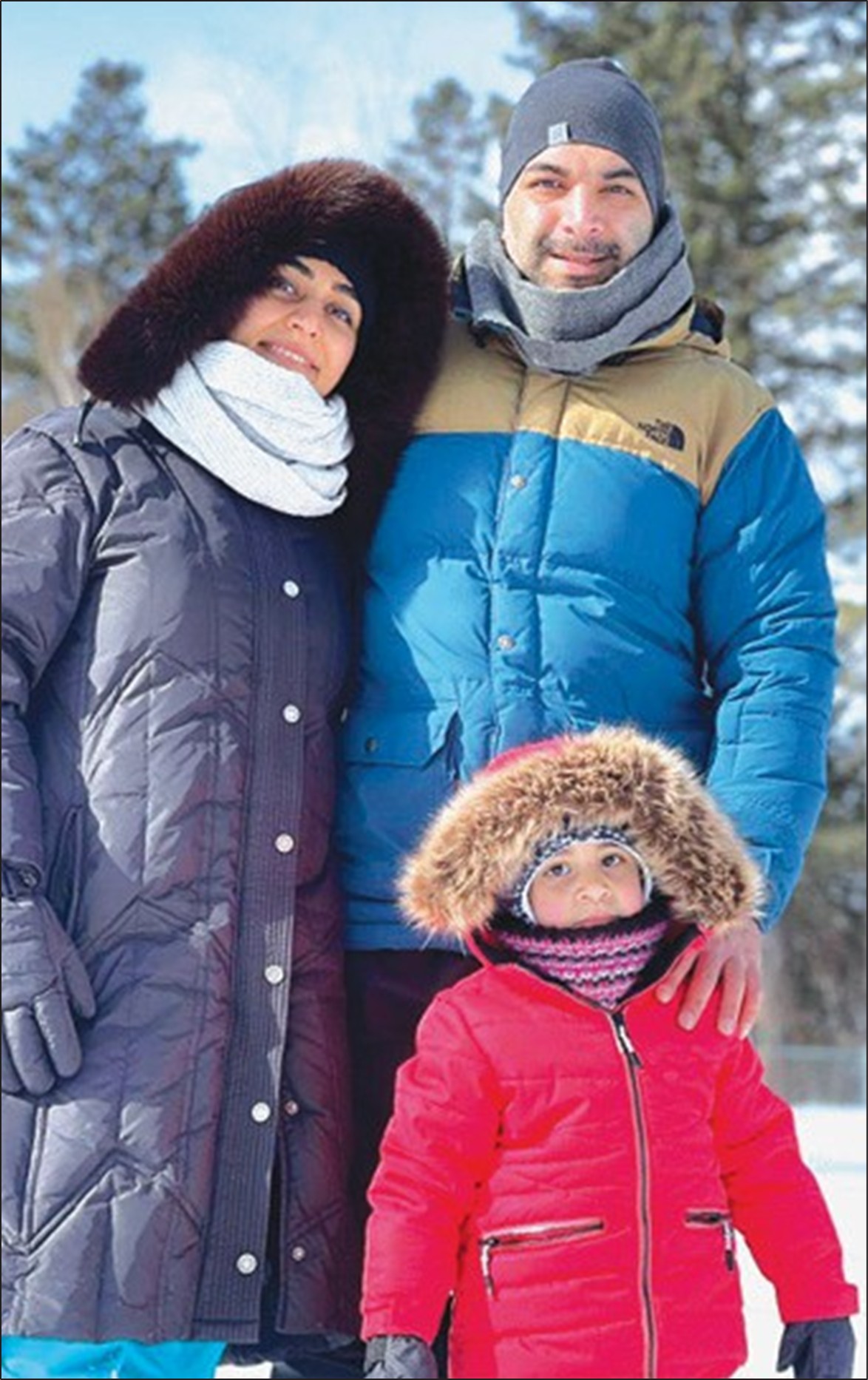
Kavon Iraniha, 27, got back into the United States two days later by the simple expedient of flying to Mexico and then walking into the United States at a border immigration station. On the US side, he was met by his Iranian-born father, Nasser, and American-born mother.
Iraniha said he had received no explanation from US officials as to why he was on the no-fly list.
The list was created after the 9-11 attacks to keep questionable people off planes coming to the United States. The government has said little about how people get on the list.
The list has caused much trouble, especially with transliterations of the many Arab names on the list. One known terrorist got onto a plane to the United States because the Roman alphabet transliteration of his name on his passport was different from the Roman alphabet spelling of his name on the no-fly.
The list is simply a compilation of names without other identifying data. An Edward Kennedy has been identified as a potential terrorist, so all Edward Kennedys are stopped from boarding planes, including the late senator from Massachusetts.
Rep. John Lewis, Democrat of Georgia and a famous name from the civil rights era, was also stopped some years back. He reported that he avoided trouble thereafter by having his staff book his tickets using his middle initial with his name, thereby apparently foiling the computer search.
Iraniha was born and reared in San Diego. He has just completed a graduate degree in Costa Rica and was at the airport with his family, who attended his graduation, to board a plane for home last Tuesday. He was stopped from boarding. His father and two brothers—Sherwin, a high school wrestling champion in California, and Jahan—were able to fly.
The next day he went to the US embassy for help. He said he was shocked when he was questioned by the FBI agent at the embassy about his political and religious affiliations.
The Council on American-Islamic Relations (CAIR) has taken up Iraniha’s case. Hanif Mohebi, executive director of the CAIR chapter in San Diego, said no clear reason was given to Iraniha by the FBI or US diplomats as to why his name was placed on the no-fly list. That is standard procedure. No one is known to have ever received an explanation, even when they have succeeded in getting their name removed.
In some cases where a person stopped from boarding shares a name with a person legitimately on the list, the US government has given such persons letters they can present when trying to board a plane.
The no-fly list is understood to contain more than 20,000 names, of which about 500 are US citizens. Most are Middle Eastern names—but not all, as attested to by the experiences of Edward Kennedy, John Lewis and David Nelson, a Hollywood producer who played a teenaged son in the 1950s’ TV comedy, “Ozzie and Harriett.”
Iraniha wrote an account on his Facebook page, saying, “When I tried to ask why I was on the No-Fly list, I didn’t receive any answers. Why am I restricted from my rights as a US citizen? I don’t have any felonies. I am not a druggie! I am an educated American-Iranian Muslim citizen; I guess that makes me a threat.”
A self-described peace activist, he is known for pro-Palestinian views. His master’s degree from Costa Rica is in international law with a focus on the peaceful settlement of disputes. It was awarded by the UN-accredited University for Peace in Costa Rica.
Interviewed by The San Diego Union-Tribune, Iraniha said that during six hours of questioning at the US embassy in Costa Rica he was asked about Islam, his being a Muslim and his views about and travels to Muslim countries. He was also asked for the full names of people he visited or stayed with while visiting in the Middle East. His recently visited family members in Iran.
He said the FBI agent asked him whether he ever wanted “to cause damage to a Jewish center in San Diego or a US official building.” Iraniha said that question struck him as “really ridiculous.”
Iraniha said, “It’s dis-crimination…. I was shocked. It was really weird to have such questions being asked. First and foremost, I’m an American and, secondly, I don’t believe in violence.”
US embassies in small and friendly countries like Costa Rica often have very junior staff assigned to gain experience at the beginning of their careers. It is possible that his treatment by the embassy diplomats and FBI agent was the result of inexperience on their part.
Iraniha said he flew home in December for winter break and had no problems boarding the plane in Costa Rica or a few weeks later boarding in San Diego for his return to school. That begged the question whether his name was a very recent addition to the no-fly list.
Iraniha said he was suspicious that his experience was just part of what he thought might be an FBI ploy to recruit informants through intimidation. “They put you on a no-fly list and then, to get off of it, they say, ‘Oh, we want you to be an informant,” Iraniha told The Huffington Post.
After walking across the border at a checkpoint south of San Diego, he told San Diego TV station KNSD he was unable to fathom why the US government allowed him to come home on foot but not by air.
That is because the no-fly list was designed for aircraft security after four planes were hijacked on 9-11 to attack buildings. It is not a ban on residency in the United States, just on flying into or inside the United States.
Despite his experience, Iraniha said he still loves the United States. “We have so many freedoms here that you know you don’t get everywhere else,” he told KNSD.
His father told the Union-Tribune he just wants to know why his son’s name was put on the list. “None of this makes sense,” he said. “Whoever did this is not American.”