




• About Us
  • Subscription
  • Contact Us
Monday, March 9, 2026
  • Login
Iran Times
  • Home
  • What’s the News
    • All
    • baygani
    Army Says It Makes Some Officers UN Peacekeepers

    Army Says It Makes Some Officers UN Peacekeepers

    Iran May Curry Favor With Egypt By Axing Street Name

    Iran May Curry Favor With Egypt By Axing Street Name

    Regime Barks Loudly At Dog Owners

    Regime Barks Loudly At Dog Owners

    Campaign To Rid Iran of Afghans Moves Into Trumpian High Gear

    Campaign To Rid Iran of Afghans Moves Into Trumpian High Gear

    Russia, China Interfere To Stunt Iran Nuclear Plan

    Russia, China Interfere To Stunt Iran Nuclear Plan

    Regime Hangs Convicted Killer of 7 in 2022 Protests

    Regime Hangs Convicted Killer of 7 in 2022 Protests

    Trump Kicks Trio Off Iran Issues For Being Too Pro-Israel

    Trump Kicks Trio Off Iran Issues For Being Too Pro-Israel

    Omid The Siberian Crane May Have Died

    Omid The Siberian Crane May Have Died

    Israel Built Drones In A Factory Set Near Tehran

    Israel Built Drones In A Factory Set Near Tehran

  • Diaspora
  • Economy
    Economist Says Biggest Problem For Iranian Economy is State Controls

    Economist Says Biggest Problem For Iranian Economy is State Controls

    US Stops Turkmen Gas Crossing Iran For Iraq

    US Stops Turkmen Gas Crossing Iran For Iraq

    For Umpteenth Time, Auto Privatization Again Killed

    For Umpteenth Time, Auto Privatization Again Killed

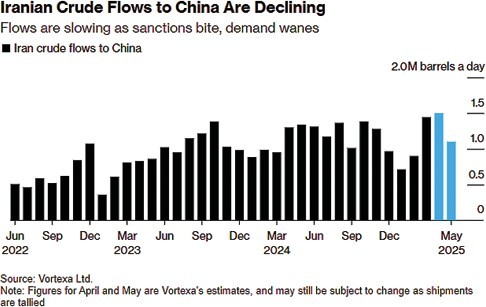
    China Oil Buy Drops, But Remains High

    China Oil Buy Drops, But Remains High

    Gov’t Ends Ban Importing Goods Made In Iran

    Minimum Wage is Boosted 45%

    Banks Must Keep More Money On Hand

    Banks Must Keep More Money On Hand

    Russian Says Iran Watermelons Unsafe

    Russian Says Iran Watermelons Unsafe

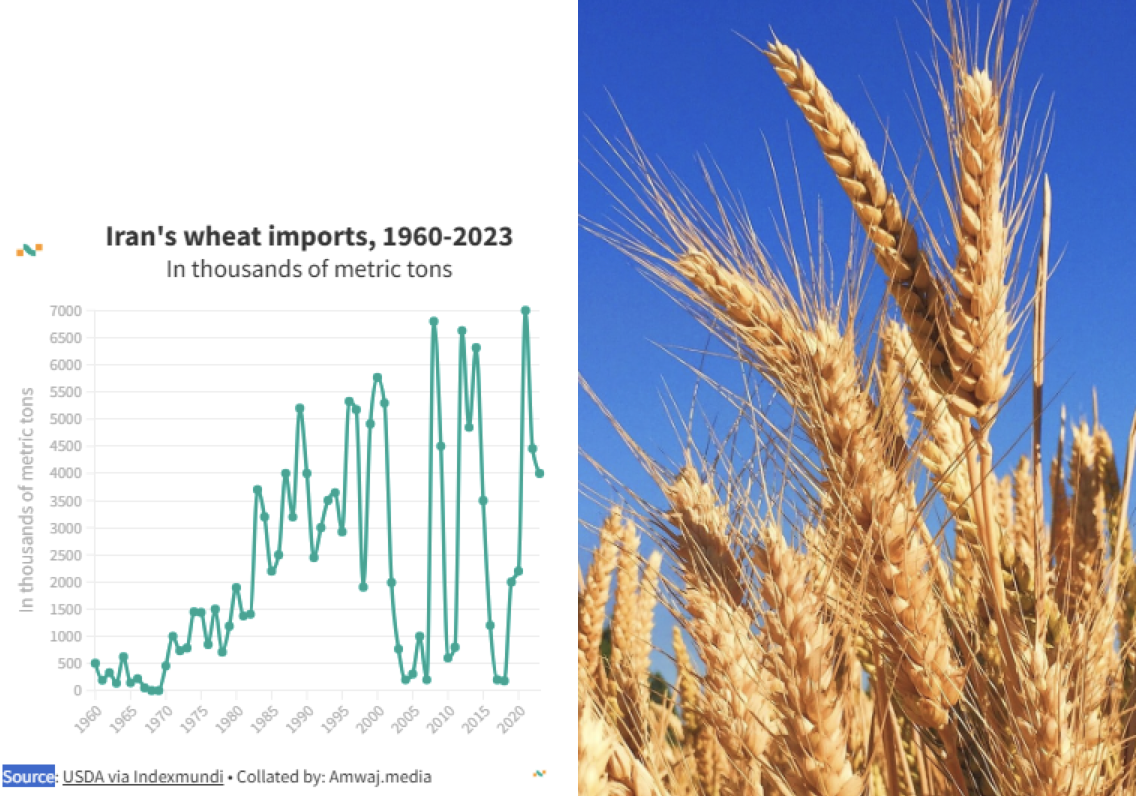
    Iran Not To Be Self-Sufficient In Wheat This Year

    Iran Not To Be Self-Sufficient In Wheat This Year

  • Tidbits and Morsels
  • Latest
    Hell Comes To A Pasdar Base North of Tehran

    Hell Comes To A Pasdar Base North of Tehran

    US Mail To Iran Is Suspended

    President Takes Time Off For Surgery

    President Takes Time Off For Surgery

    After Month Of Talks, Trump Decides He Wants No Enrichment

    The Lights Are Going Out All Over Iran

    Drone Attack That Killed 3 US Troops in Jordan Could Have Been Foiled

    Iranian-Canadians Reportedly Turned Away at US Border

    Iranian-Americans: an Account of Integration and Achievement

    Jamshid Myth

  • About Us
  • Advertising
  • Subscription
No Result
View All Result
  • Home
  • What’s the News
    • All
    • baygani
    Army Says It Makes Some Officers UN Peacekeepers

    Army Says It Makes Some Officers UN Peacekeepers

    Iran May Curry Favor With Egypt By Axing Street Name

    Iran May Curry Favor With Egypt By Axing Street Name

    Regime Barks Loudly At Dog Owners

    Regime Barks Loudly At Dog Owners

    Campaign To Rid Iran of Afghans Moves Into Trumpian High Gear

    Campaign To Rid Iran of Afghans Moves Into Trumpian High Gear

    Russia, China Interfere To Stunt Iran Nuclear Plan

    Russia, China Interfere To Stunt Iran Nuclear Plan

    Regime Hangs Convicted Killer of 7 in 2022 Protests

    Regime Hangs Convicted Killer of 7 in 2022 Protests

    Trump Kicks Trio Off Iran Issues For Being Too Pro-Israel

    Trump Kicks Trio Off Iran Issues For Being Too Pro-Israel

    Omid The Siberian Crane May Have Died

    Omid The Siberian Crane May Have Died

    Israel Built Drones In A Factory Set Near Tehran

    Israel Built Drones In A Factory Set Near Tehran

  • Diaspora
  • Economy
    Economist Says Biggest Problem For Iranian Economy is State Controls

    Economist Says Biggest Problem For Iranian Economy is State Controls

    US Stops Turkmen Gas Crossing Iran For Iraq

    US Stops Turkmen Gas Crossing Iran For Iraq

    For Umpteenth Time, Auto Privatization Again Killed

    For Umpteenth Time, Auto Privatization Again Killed

    China Oil Buy Drops, But Remains High

    China Oil Buy Drops, But Remains High

    Gov’t Ends Ban Importing Goods Made In Iran

    Minimum Wage is Boosted 45%

    Banks Must Keep More Money On Hand

    Banks Must Keep More Money On Hand

    Russian Says Iran Watermelons Unsafe

    Russian Says Iran Watermelons Unsafe

    Iran Not To Be Self-Sufficient In Wheat This Year

    Iran Not To Be Self-Sufficient In Wheat This Year

  • Tidbits and Morsels
  • Latest
    Hell Comes To A Pasdar Base North of Tehran

    Hell Comes To A Pasdar Base North of Tehran

    US Mail To Iran Is Suspended

    President Takes Time Off For Surgery

    President Takes Time Off For Surgery

    After Month Of Talks, Trump Decides He Wants No Enrichment

    The Lights Are Going Out All Over Iran

    Drone Attack That Killed 3 US Troops in Jordan Could Have Been Foiled

    Iranian-Canadians Reportedly Turned Away at US Border

    Iranian-Americans: an Account of Integration and Achievement

    Jamshid Myth

  • About Us
  • Advertising
  • Subscription
No Result
View All Result
Iran Times
No Result
View All Result

AFP says Iran’s economy is weighed down by much more than Trump

January 25, 2019

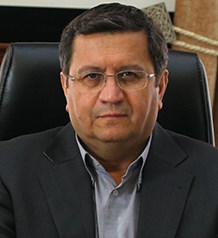
HEMMATI. . . bank governor

In an analysis of Iran’s economy, Agence France Presse (AFP) concludes that the country has many more challenges dragging it down than Donald Trump’s sanctions.

The rial has plummeted since sanctions were announced—but the rial was speeding downward months before Trump acted.  So it’s not surprising that many analysts say many of the country’s woes pre-date Trump and the sanctions.

Iran-based economist Mohammad Mahidashti told AFP the banking system is the “biggest problem — riddled with fictitious assets and non-performing loans.”

Banks issued huge loans under President Mahmud Ahmadi-nejad with little apparent care for whether they would be repaid.  The Majlis economic commission said in March that half of all these loans—worth around $27 billion at the time – had turned sour.

Desperately short of funds, banks have tried to attract fresh deposits with interest rates of 30 percent or more.  While providing a much-needed source of liquidity initially, the interest that must be paid on these deposits has only added to the banks’ instability.

President Rohani said recently that “unhealthy” banks were being kept afloat by continuously borrowing from the Central Bank, and the debts of private lenders doubled in the year to September.  Banks are also saddled with unsellable properties after pumping cash into a construction boom that ran out of steam around 2013.

“We have close to two million empty houses in Iran. There is simply no demand out there,” Narges Darvish, an economics lecturer at Tehran’s Alzahra University, told AFP.

But the government is loath to let banks fail, fearing a public backlash—especially after the collapse of dodgy credit agencies helped fuel widespread protests a year ago.

The US withdrawal from the nuclear deal fueled a run on the Iranian rial, but was not the only factor behind the currency’s weakness.  In September, Central Bank Governor Abdolnasser Hemmati instead blamed “horrific growth in the money supply.”  Bank data show that the amount of cash flowing around the Iranian economy has increased 24 percent annually for the past four years, starting long before Trump was even running for president.  (In the United States, the money supply has risen an average of 6.4 percent a year for the last decade.)

Given that Iran’s economy offers few profitable and secure investment opportunities, citizens had already long ago sought to change rial savings into dollars.  And when rising expectations that the US would re-impose sanctions pressured the rial in earnest in early 2018, the government’s reaction was a mess, according to economist Mousa Ghaninezhad.

“They claim they believe in the free market, but they have no coherent strategy,” he told AFP.

At one point, in April, the government forcibly shut down exchange houses and tried to fix the rate at 42,000 rials per dollar—which only fueled panic and drove speculators into the black market.  That was a month before Trump announced he was pulling the US out of the nuclear deal and would reimpose sanctions over the next six months.

Recognizing its mistake, the government reopened exchange shops and sacked the Central Bank governor a few months later.

A fierce crackdown was also unleashed on those exploiting the situation, with dozens of traders put on trial and at least three businessmen executed since October.

But the damage had been done, AFP concludes.  Imports are now vastly more expensive at the same time as sanctions make it harder to move goods into the country.  Prices have been rising as a result—the cost of food and drink rose 60 percent in the year to November, according to the Central Bank.

Despite a privatization drive, much of the economy remains in the hands of the state, either directly, or because groups connected to the government or military are the major shareholders.  This has stifled the private sector, which struggles to attract investment and compete for projects, analysts say.

Economist Ehsan Soltani told AFP state-controlled industries like steel and petrochemicals benefit from huge subsidies—totaling around $40 billion a year in fuel and electricity discounts—but create relatively few jobs and returns.  “These industries are only wanted because of rent and corruption.”

Hopes that the nuclear deal would bring a flood of foreign investment to boost the private sector have been dashed by the return of sanctions.

Meanwhile, efforts to bring greater transparency—notably, new laws against money laundering—have been opposed by powerful vested interests, according to Foreign Minister Mohammad Javad Zarif.  “Those places that launder thousands of billions [of rials] are certainly financially capable of spending a few hundred billion on propaganda [against the proposed laws],” Zarif told the Khabar Online news agency.

Previous Post

Khamenehi orders changes in budget

Next Post

Sadeq Larijani takes over Expediency Council

Related Posts

Economist Says Biggest Problem For Iranian Economy is State Controls
Economy

Economist Says Biggest Problem For Iranian Economy is State Controls

US Stops Turkmen Gas Crossing Iran For Iraq
Economy

US Stops Turkmen Gas Crossing Iran For Iraq

For Umpteenth Time, Auto Privatization Again Killed
Economy

For Umpteenth Time, Auto Privatization Again Killed

Next Post
Sadeq Larijani takes over Expediency Council

Sadeq Larijani takes over Expediency Council

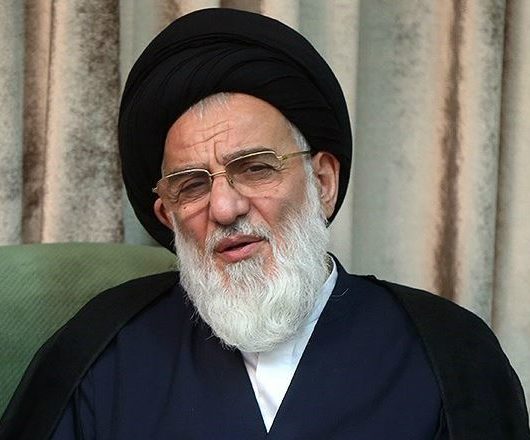
Shahrudi, Expediency Council chair, dies at 70

Shahrudi, Expediency Council chair, dies at 70

Leave a Reply Cancel reply

Your email address will not be published. Required fields are marked *

  • About Us
  • Contact Us
  • Advertising
  • Subscription
  • Culture
  • Economy
Call us: +1 (202)-659-9868

© 1970-2025 Iran Times - ‬An‭ ‬Independent‭ ‬Newspaper

Welcome Back!

Login to your account below

Forgotten Password?

Retrieve your password

Please enter your username or email address to reset your password.

Log In
No Result
View All Result
  • Home
  • What’s the News
  • Diaspora
  • Economy
  • Tidbits and Morsels
  • Latest
  • About Us
  • Advertising
  • Subscription

© 1970-2025 Iran Times - ‬An‭ ‬Independent‭ ‬Newspaper

Are you sure want to unlock this post?
Unlock left : 0
Are you sure want to cancel subscription?
Go to mobile version