













export terminal at Jask, its first export terminal outside the Persian Gulf.
At first glance, the announcement appeared to be an effort to reduce Iran’s vulnerability to a war in the Persian Gulf. The Islamic Republic likes to shout that it will close the Strait of Hormuz to tanker traffic if its exports are reduced. But Iran is the only Persian Gulf oil producer to send all of its crude exports through the straits. The others have pipelines that bypass the strait for part, though not all, of their oil exports.
However, a second look raises questions about that conclusion. The Oil Ministry said the Jask terminal would be a hub for exports from Central Asia; Iran is trying to encourage those countries to send oil through Iran and pay Iran a transit fee.
The announcement said Iran would build a pipeline from Nekka on the Caspian Sea to Jask. That pipeline would not go near any of Iran’s major oilfields and so could not be used for Iranian exports. (Iran does claim to have made a major oil discovery in the Caspian, but some think Iran may be exaggerating the find and others doubt Iran’s ability to develop a field at the huge depth it announced.)
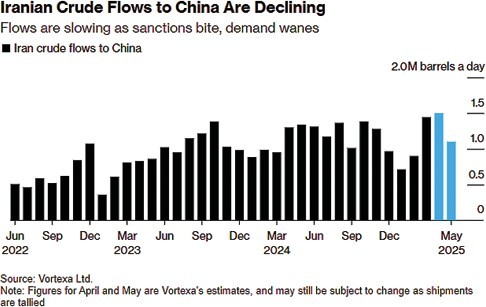
The Oil Ministry said the Nekka-Jask pipeline will be able to carry 1 million barrels of oil a day, the equivalent of about 40 percent of Iran’s exports before the recent crimp caused by foreign sanctions.
The Oil Ministry said the terminal would cost $5.2 billion to construct. It gave no date for completion.
The overwhelming majority of Iranian crude is exported from Kharg Island in the far north of the Persian Gulf with much smaller quantities loaded at the islands of Lavan and Sirri in the southern Persian Gulf.
