






The decision was billed as being in line with the Now Ruz decree of Supreme Leader Ali Khamenehi to make this a year devoted to increasing the output of goods in Iran.
That, in turn, is in keeping with the revolutionary philosophy of self-sufficiency or autarky, in which the regime wants to make the country capable of producing everything it needs so it is not dependent on any imports. The revolutionary worldview holds that a dependency on imports makes Iran subject to unacceptable pressures from foreigners.
Most of the rest of the world has shifted to the concept of “interdependency” in which countries have a shared dependency on one another and thus a shared interest in stability and in one another’s prosperity. The Islamic Republic adheres to what critics assail as a 19th century worldview of international affairs as a zero-sum game in which one state can prosper only at another’s state’s expense.
While the official position of the Islamic Republic is autarkic, many within the regime disparage that whole concept as silly if not dangerous ideology. But they dare not speak out publicly against it.
It was noted that the Supreme Council for the Cultural Revolution banned the advertising of foreign-made goods for which there is a domestic equivalent, but it did not ban the import of such goods. Iranian manufacturers have long advocated bans on such imports or, at least, very hefty import duties.
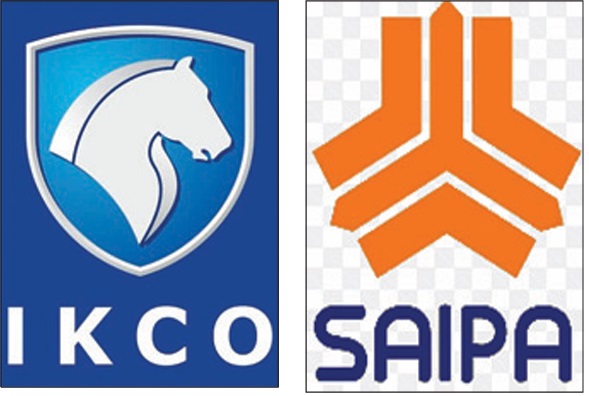
Last year, the auto industry won support from Khamenehi to reverse the Majlis vote lowering the import duty on cars and forcing it back up to 100 percent. Many critics have said there is clearly something wrong with Iran’s auto industry if it feels threatened by an 80 percent duty on its foreign competitors.
Mansur Vaezi, an official of the Supreme Council for the Cultural Revolution, announced the new decree, saying, “It is forbidden to advertise foreign goods and services that have domestic counterparts. It is also forbidden to advertise domestic goods and services that have foreign names.”
That latter provision is part of the campaign to cleanse Iran and the Farsi language of foreign cultural influences, which has included such past actions as forbidding the use of the word “pizza.”
Vaezi did not explain how the new policy was to be enforced. No list of foreign products whose advertising is now banned was released. Presumably, it will be left to domestic manufacturers to file complaints against competitive advertising. But to whom they should complain was not announced.
The absence of such detail hinted that the new pronouncement may be one more “paper policy” that is enacted to appease revolutionary zealots without having any real impact.
The Supreme Council was created in 1984 by Ayatollah Khomeini. It currently has 41 members. The president always chairs the council.
