












as Majlis Speaker Ali Larijani successfully appealed to them not to fire the economics minister.
Ahmadi-nejad personally came to the Majlis chamber and spoke from the podium to defend his cabinet minister. In so doing, however, he reversed years of political rhetoric by appealing to the deputies to help fight US sanctions, which he said were devastating for Iran.
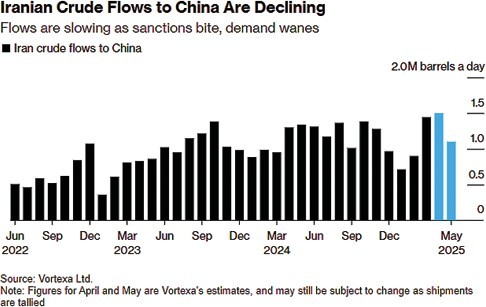
All Iranian officials have pooh-poohed sanctions for decades. As recently as last week, Ahmadi-nejad said the sanctions were just a joke with no impact on Iran.
But Tuesday, Ahmadi-nejad said, “Our banks cannot make international transactions anymore.” He appealed to the deputies to keep his government together so it can counter the sanctions. He said Economy Minister Shamseddin Hossaini was key to the effort to overcome the impact of the sanctions.
Then Larijani spoke from the podium and, surprisingly, appealed for support for Ahmadi-nejad’s embattled minister. Larijani has normally appeared delighted to see the president entangled in political woes. But Tuesday, Larijani appealed for support for Hossaini, saying Iran faces too many problems to take such a disruptive step.
Hossaini survived with only 93 deputies or less than one-third voting to oust him and 141 voting to keep him, with 10 deputies abstaining and 46 absent.
Larijani is related by marriage to Supreme Leader Ali Khamenehi and many deputies assumed Larijani was presenting Khamenehi’s wishes. It is widely believed, based on Khamenehi’s actions and public comments in recent months, that Khamenehi was not displeased to see the president cut down to size last spring but feels things have gone far enough. He publicly opposed proposals to boot Ahmadi-nejad out of office and said he should serve out his term, another 21 months.
Larijani told the deputies Tuesday that a vote to oust Hossaini would “intensify tensions” between the government and Majlis, something that he said was not needed.
He said, “We are not in a position to increase the cost of running the country. You have shown a yellow card to the minister [by summoning him before the Majlis]. That is enough for now.”
The main reason stated for the motion to oust Hossaini was his failure to detect the $2.6 billion banking fraud while it was in progress. But since no one detected it until August, when the system then moved into action, it was difficult to find the logic for striking at Hossaini. Most analysts saw Hossaini as just a stand-in target for deputies who want to assail Ahmadi-nejad.
Ahmadi-nejad acknowledged there was corruption but said the Majlis and government should unite to confront it and not brawl over the issue. “Instead of blaming one another, we must turn this matter [the fraud scandal] into an opportunity for the country.”
Hossaini threw himself on the mercy of the deputies, begging for forgiveness for not uncovering the fraud earlier. “I apologize to every single one of you, to the public and to the staff of the ministry and banks. May God forgive me.”
The Islamic Republic has routinely told the Iranian public that sanctions are harmless. But it told the United Nations several years ago that sanctions had cost the Iranian economy billions of dollars. There is one story for the domestic audience, to calm their fears, and another story for the foreign audience, to elicit sympathy for the Islamic Republic.
While US sanctions have been around for decades and UN sanctions for four years, the real punch to the solar plexus didn’t come from any sanctions voted for in the US Congress or the UN Security Council, but rather from a series of banking restrictions the US Treasury began applying in 2005 when Stuart Levey became the under secretary of the Treasury.
In its simplest form, Levey decreed that foreign banks doing business with Iran could not have access to US financial institutions. They were given a choice—do business with Iran or do business with the United States. That was an easy choice for most banks. It has tied Iran in knots, leaving it to do business internationally in intricate, circuitous and costly ways. But until Ahmadi-nejad spoke out Tuesday, no Iranian official had admitted the pain publicly.
The Majlis has been moving in recent days to summon Ahmadi-nejad to the chamber to answer questions about his conduct. No president has ever before been summoned for such questioning. In the light of Tuesday’s vote, it isn’t clear if the effort to nail Ahmadi-nejad to the wall will now fade away.