











over to the “full supervision” of the IAEA—but then took the offer back the very next day.
It appeared that Fereydun Abbasi-Davani, director of the Atomic Energy Organization of Iran, had overstepped acceptable bounds with his offer and was forced to reverse himself.
But Abbasi never said on Tuesday that he was withdrawing his offer of Monday. He simply restated Iranian policy on dealing with the International Atomic Energy Agency (IAEA) in such a way as to negate what he had said just 24 hours earlier.
Iran’s policy over the past few years has been very clear. Iran has said over and over again that it will fulfill all its legal obligations to the IAEA to the letter—but will not volunteer to do anything it is not clearly required to do.
In fact, the IAEA has repeatedly accused Iran of not doing even the minimum it is required to do under its legal commitments to the IAEA.
On Monday, Abbasi took a dramatic step and proclaimed that Iran was ready to give the IAEA “full supervision” of Iran’s nuclear program for five years if sanctions on Iran were lifted.
Abbasi did not explain what he meant by the term “full supervision.” He also was not specific about what sanctions he wanted lifted, but since he spoke of sanctions only generally he presumably meant UN, EU, US and all other sanctions linked to Iran’s nuclear program.
As reported by the Iranian Students News Agency (ISNA), Abbasi said, “We have proposed that the agency keep Iran’s activities and nuclear program under full supervision for five years, provided the sanctions are lifted.”
He also said, “By lifting the sanctions and meeting mutual obligations, the agency can completely supervise Iran’s nuclear activities without broaching military aspects and alleged studies.” The term “alleged studies” refers to American charges that it has evidence Iran conducted studies in how to construct a nuclear warhead.
That was a dramatic shift from Iran’s previous position. But just 24 hours later, Abbasi reverted to Iran’s previous position.
On Tuesday, he said, “We have always had full cooperation with the [IAEA] and this full cooperation is still underway.” He simply ignored the fact that the IAEA has repeatedly said Iran is failing to cooperate fully with it.
Abbasi said, “We cooperate within the limits of the rules and regulations on the condition that they respect our rights. But we will not accept additional undertakings.” That last sentence negated what Abbasi had just said the day before and returned Iran’s position to what it has been for the past few years.
It appeared Abbasi spoke out Monday without his policy statement having been cleared by all those who needed to clear it. But it isn’t known who was ignored. Some thought that the speed with which Abbasi backtracked suggested Supreme Leader Ali Khamenehi himself intervened and called Abbasi on the carpet. But that was just speculation.
It is also possible that Abbasi fell afoul of more ordinary bureaucratic fixtures. No one in his position has ever handled talks with the outside world on the nuclear program. That public role has been assigned ever since the start of talks to the secretary of the Supreme National Security Council, currently Saeed Jalili. It is possible that Abbasi stepped across a bureaucratic red line with his statement Monday and ran into a buzz saw. Still, many analysts thought that kind of problem would not have forced such a rapid climbdown by Abbasi.
Abbasi’s Monday proposal was going anywhere abroad, however. Only hours after Abbasi unveiled his proposal, the European Union rejected it. The EU has never been known for the rapidity of its responses, largely because so many officials must normally be consulted given that the body has 27 member states. But it only took a few hours Monday for the EU to give a thumbs down.
Michael Mann, the spokesman for EU foreign policy chief Catherine Ashton, said: “Iran still has to comply with its international obligations.” In other words, the Islamic Republic must first cease its uranium enrichment as required by four UN Security Council resolutions.
It appeared that Ashton immediately saw Abbasi’s proposal as a trap intended to look like a fresh offer while quietly slipping around the enrichment issue. The swift response from Ashton also avoided the danger that some less sophisticated politicians around Europe might have spoken out first and called Abbasi’s offer worthwhile.
The United States fell mute and left the response to Ashton.
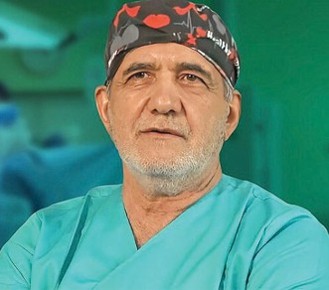
Abbasi is a nuclear physicist who was named to head the nuclear agency earlier this year. He was the target of an assassination attempt late last year, but jumped out of his car just seconds before a magnetic bomb attached to it exploded.