





August 06, 2021
by Warren L. Nelson
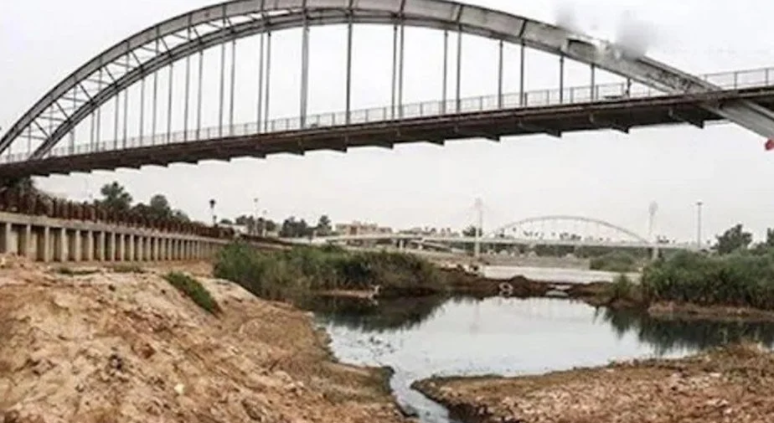
with the largest outpouring of angry citizens appearing to be in Khuzestan province, where the Karun River (above) is now down to a comparative trickle.
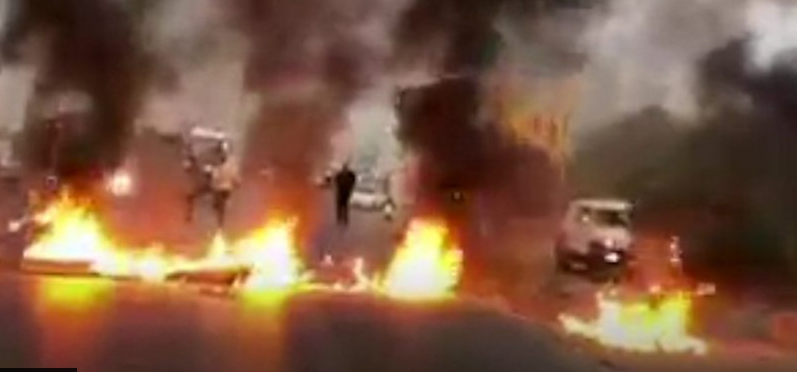
Some protests are public marches and chants. Some have gotten to be violent.
The main feature of the protests may be the burning of tires, like those below.
More and more Iranian cities are seeing antiregime protests erupt since they started in mid-May the protests center on many different problems from low pay to water shortages to electrical blackouts to too few subway cars.
 There is no national theme or structure to the protests though very many of them, probably a majority, have included chants demanding the overthrow of the Supreme Leader ”Marg bar diktator” (Death to the dictator).
Most of them involve rather small gatherings, not the giant turnouts of 1978, with the largest protests appearing to be in Khuzestan province where the primary motivator is a water shortage. The 1978 protests were heavily organized, with anti-monarchist parties and clerics setting march routes and policing the edges of the march to keep people in line and discouraging violence. But the latest protests apart from labor-organized demonstrations appear mostly spontaneous and are very, very different from 1978.
Tehran, usually the center of anti-regime protests, has not seen that much activity and what protests there have been are widely scattered. The first Tehran protest was at a Metro station over the lack of subway trains. Another was at a shopping mall when the electricity went out. A third came following a soccer game, when fans of the victorious team switched from chants supporting their team to chants opposing the regime.
The first large and apparently spontaneous uproar came at a west Tehran Metro station when commuters found themselves packed into the station on a hot day because the authorities had canceled some trains. Trains had been canceled because the government had ordered a citywide lockdown in response to the latest surge in coronavirus cases. But the public largely ignored the lockdown and continued to go to work and to shops, overwhelming the reduced Metro service.
They started screaming opposition to the regime, including chants of “Death to the Dictator.” Such chants have been heard in the last decade at scattered demonstrations. But from videos posted on social media, they seem to have become the norm in the last few weeks certainly in Khuzestan and in the Tehran Metro station.
The Metro station protest also reflects the public’s weariness with restrictions to fight the coronavirus epidemic. The public seems to have given up on that fight. Officials have been complaining for weeks that health restrictions are being ignored.
The electricity shortage has also worsened. Mostafa Rajabi Mashhadi, the spokesman for the Energy Ministry, said daily demand for electricity topped 65,000 megawatts in late July while the country can only produce 54,000 megawatts. Mathematically, they would mean every household would need to be denied electricity for four hours every day.
The string of protests began in mid-May as the demand for electricity first exceeded the supply and the result was blackouts all over the country. But the main problem wasn’t that the electricity went off, but that it went off at times when the regime’s published rolling blackout schedule said it would be on. The inability to plan for the lack of electricity seemed to be more infuriating than the lack of electricity itself.
Then, in June, many unions started strikes mainly of workers in the oil, gas and petrochemical industries. The strikes were chiefly over low pay and over the failure to pay on time. Those strikes continue.
Next, on July 15, Khuzestan erupted in the largest protests to date, accusing the regime of taking no action to provide the public with adequate water supplies. There was considerable objection to the massive dam construction program that has diverted supplies from many residential communities in Khuzestan to dry areas in the middle of the country.
As indicated by videos, many of these protests drew tens of thousands of unhappy citizens. Gunfire could be heard in many of the videos. The water protests continue almost every day.
On July 30, the Persepolis soccer club of Tehran defeated Paykan to end the season and top the league for the fifth year in a row. Fans poured out of the stadium into the streets of the capital, as usual. But this time, the cheering turned grim, as fans instead chanted “Death to the dictator,” “Mullahs get lost” and “Death to Velayat-e faqih,” the regime’s ruling principle that clerics are in charge.
Videos showed security forces attacking and beating angry fans.
Another chant heard at many of the protests is, “Reza Shah, God bless you,” obviously intended as a rejection of the revolutionary regime. Yet another, which has been heard since 2009, opposes the regime’s interventionist foreign policy: “No Gaza, no Lebanon; I sacrifice my soul for Iran.”
As per usual, the government is not announcing casualty numbers or figures on arrests. Amnesty International said in mid-July that it had verified eight deaths. IranWire put the death toll at 10 at the end of July in Khuzestan and Lorestan provinces alone. Despite censorship, the daily Hamshahri reported that 300 people had been arrested in Susangerd, a city in Khuzestan province. On the fourth day of protests there, security troops moved in and began using force to disperse the crowd, which Hamshahri put at up to 12,000.
The daily and lengthy interruptions of electricity across Iran are disrupting life for citizens more than anything else since the revolution and pose a huge challenge for the Islamic Republic’s very existence.
The problem isn’t simply that the electricity goes off which happens in many countries but that the government ignores its own schedule of blackouts. The power can go out at any time, meaning no one can plan around a blackout schedule. A hospital cannot close down its operating rooms for specified hours; a housewife cannot plan when she will iron.
The electrical problems began in mid-May and have escalated over three months. Relief is not expected until the fall when lowering temperatures will end the use of air conditioning. The demand for air conditioning now is higher than normal as climate change has been producing hotter days than previously. Many communities in Iran have reported mid-day temperatures hitting 50 degrees centigrade (122 Fahrenheit).
Protests have been reported from all major and many smaller cities across the country. From videos, it appears that many have attracted thousands of protesters, while others have involved just a few hundred gathering together and chanting.
A number of protests have been called to support the people in Khuzestan in their demand for more water. Khuzestan is one of the few provinces in the country to be adequately supplied with water in normal times. But many dams in the provinces have now diverted water to drier provinces. The Karun River, which flows through the province, now flows erratically. Residents who turn on their water taps frequently find the water is brown and that may be the key driver for the almost daily protests since mid-July.
While many of the protests appear entirely spontaneous, in Tehran IranWire said two protests were called by regime critics in late July to support the Khuzestan protests. Both were small and both ended in violence when security forces attacked. Narges Mohammadi, only recently released from prison, was among those arrested at one of those rallies.
The labor protests that began June 19 have not gotten much attention since Khuzestan erupted in July. But the labor protests continue and are important because they are concentrated in the oil industry. Most of the protesters appear to be contract workers, who are not regular members of the industry’s workforce. The law provides substantial protections for labor but industries all over the country long ago started hiring most workers as contract labor, which makes them exempt from those legal protections.
Many of the contract laborers are now striking all over the south. The biggest target of the strikes appears to be the delayed payment of wages, which is something of a normal in Iran. But there’s a difference between pay arriving two or three days late and wages still unpaid after several months. Strikers are also demanding pay raises to reflect the huge inflation of recent years. Only rarely, however, do they appear to be protesting the very system of contract labor, which allows them to be dismissed at the end of each contract period, often just 60 or 90 days.
One report said drivers of tanker trucks that carry fuel to electrical generating plants were on strike a fact that would exacerbate the already short supply of electricity.
Iran International said workers from more than 100 firms that service the oil industry have been on strike.
In Esfahan, protests in early July over the lack of water in the Zayandeh River prompted the authorities to release water from upriver dams. But that flow was stopped and protests resumed July 26.
In an effort to improve the electrical supply, the regime has halted electricity exports to Iraq, Afghanistan and Pakistan. But Pakistan announced July 31 that Iran had resumed electrical transmission to it. In Pakistan, three districts in the far southwest are not linked to Pakistan’s national grid and get their electricity solely from Iran. When Iran cut the supply, they were left totally in the dark with no recourse to any other supplies.