








July 11, 2014
By Reza Marashi
Chaos often breeds opportunity, and nowhere is this more apparent than in today’s Iraq. Less apparent, however, is how key actors are approaching the opportunity. Iran is a prime example. Recent headlines have run the gamut: “Iran is putting boots on the ground!” “Iran is sending drones!” “Will Iran and America collaborate?!” While it is fair to dig deeper into these issues, individually they don’t tell the full story–because on their own, they are each subcomponents of a bigger picture: Iran’s strategy in Iraq.
Strategy can be a funny word sometimes when applied to Iran. Besides the inevitable argument over interests versus ideology, the Iranian government has long sought to conceal its decision-making processes from foreign powers, and thus appear unpredictable. But in Iraq, we have 11 years of Iranian actions that provide critical insight into what Iran is doing–and why. As Shakespeare once quipped: “What’s past is prologue.”Compared to other countries, Iran still appears to have the most cards to play in Iraq. But it is also clear that Iran has badly overreached. By seeking to advance its interests in concert with Iraqi allies at the expense of other foreign and domestic players, the Maliki government helped give rise to ISIS; lost control of more than a quarter of the country with continued threats to territorial integrity; deeply alienated Sunnis and Kurds; and now runs the risk of falling from power altogether. There is no guarantee that Iran can help put Iraq back together, but its plan is to try.
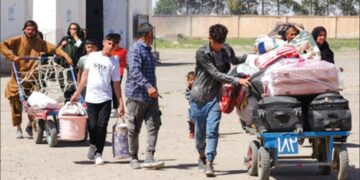
Why does Iran want to keep Iraq whole? Four reasons stand out above all else. The first two are self-explanatory: An officially independent Kurdistan on its border threatens to destabilize Iran’s (as well as Turkey and Syria’s) own restive Kurdish population. Also, Iran has learned the hard way that fragmentation begets instability leaking across its border. Tens of thousands of Iraqi refugees have fled to Iran. Unofficial estimates put the number much higher.Equally important but less understood is that a unified Iraq maximizes Iran’s ability to project power. Breaking Iraq into three states will require Iran to triple its resource expenditure and heighten its threat perception–especially vis-à-vis a militant Sunni extremist statelet. Also, Iran opposes redrawing the map of the Middle East because it is not seeking more territory. Redrawing borders according to the grievances– real or perceived–of minority communities opens a Pandora’s box that threatens the stability of Iran and all Arab countries. It is not a coincidence that Israel is pushing for Kurdish independence in Iraq.
This begs the question: How will Iran try to keep Iraq whole?
The lowest hanging fruit has been working to unite Iraq’s various Shia factions. Doing so in a sustained fashion will inevitably have to include a far less sectarian approach by both Iran and Prime Minister Maliki. However, the problem is less about Maliki and more about sectarianism across the political, religious and ethnic spectrum. Maliki is certainly guilty of this counterproductive approach–but so too are leaders of Iraq’s other religious and ethnic groups.
Privately, Iran has been critical of Maliki on both a tactical and strategic level–both of which center on his overly sectarian governance. This highlights an important aspect of Iran’s strategy: it’s less concerned with Maliki or any specific individual in Iraqi politics, and more concerned with protecting Iran’s geostrategic position and Shia brethren. Iran is not wedded to Maliki, but rather to the current Shia-led power structure in place that ensures its interests in Iraq are achieved. If Maliki proves to be a liability, Iran is willing to cut off the head of the snake in order to save the body. Working to unite Iraq’s Shia factions–with our without Maliki at the helm–ensures that Iran maximizes the levers of power at its disposal to secure its interests.
It has also become increasingly clear to some Iranian decision-makers that they haven’t done enough to facilitate the process of political, economic and social coexistence in Iraq. The resulting instability now threatens Iranian interests across the board. To remedy this, Iran is exploring the feasibility of boosting coordination between united Shia factions and Iraqi Kurds. This, in turn, provides the leverage that will be necessary when the time comes to cut a deal with the broader Sunni community in Iraq.
As ISIS has advanced, it has sharpened the focus of Iraq’s fractious political forces: Unless they rally together, no side can individually squash ISIS’ violent dissent. Iran knows this, and it has conveyed firm messages to each side. Iraqi Shias have been encouraged to follow through on Ayatollah Sistani’s call to arms for all Iraqis by rearming and boosting collaboration among each other, as well as across sectarian lines.
Iran has encouraged Iraqi Kurds to gravitate more towards the central government in Baghdad because their alternatives to greater cooperation within the current power structure are deeply unattractive. Tehran has reminded their Kurdish counterparts that they have an incentive to collaborate with a more unified Shia faction because steps in the opposite direction will meet stiff resistance: it’s only a matter of time before ISIS brings violence into Kurdish-controlled areas, and Washington, Ankara, and Tehran do not have a track record of supporting outright Kurdish independence.
Most interestingly, Iraqi Sunnis have been told that the time has come for tough decisions: embrace the current government structure in return for concrete assurances on greater inclusion, or embrace ISIS and the political, economic and social disasters that will follow.
Right now, all sides appear to be negotiating, but the bottom line is clear: ISIS threatens everyone in Iraq–Shia, Sunni and Kurd. And Iran sees that as ISIS’ biggest mistake. Nothing brings together nationalistic politicians with deep sectarian tendencies like a common enemy. Iran is seeking to leverage this threat perception convergence into a mutually agreed upon social contract based on security. If that common denominator can be established, it provides the foundation from which the countless other issues facing Iraq can be hashed out.This, of course, is the ideal scenario for Tehran. But if all else fails, it will fall back on its long-tested approach: exploiting instability and divisions. After revolution, eight years of war, varying degrees of diplomatic isolation, and economic strangulation, Iran has a demonstrated inclination for managed disorder that tends to hamstring its rivals.
Rather than adopting the American approach of putting boots on the ground, Iran prefers a strategy of committing money, weapons, intelligence and advisors–fighting down to the last Iraqi. This strategy is predicated on avoiding violence because Iran knows it can outsource it–and its strategic objectives in Iraq cannot be achieved unless its Iraqi allies are fully committed to the fight.Iran wouldn’t have to consider managing disorder in Iraq if it hadn’t overreached in the first place–but so too have the Sunnis, Kurds and their respective patrons. With their focus now on the common threat that ISIS presents, re-establishing security has become the near-term goal. If and when this is achieved, the longer-term goal comes back into focus: the reconstruction of Iraq.In many ways, Iran contributed to Iraq’s reconstruction as much as it has inhibited it. The catch, of course, is that Iran views reconstruction as a multi-tiered process–and the priority is reconstructing Iraq’s identity to reflect its long-standing demographic realities. Many Iraqi Sunnis and their patrons in the Arab world have refused to acknowledge these new realities brought about by America’s invasion 11 years ago. And from Iran’s vantage point, there will continue to be security problems in Iraq–and the region–until this fundamental issue is resolved. Between an exclusivist Shia government that neglects and marginalizes Sunnis, and a political order that preserves the privileges and patronage Sunnis enjoyed under Saddam, there remains a middle ground that has yet to be truly pursued.
For Iran, managing disorder is as much about denying the Saudis, Turks, Americans and others control in Iraq as it is maintaining Tehran’s own control. Iran would prefer to see a greater degree of long-term stability in Iraq–but not if stability comes at Iran’s exclusion and expense. Iran’s power in Iraq is formidable, and the key virtue of its strategy is patience. Decision-makers in Tehran are currently experiencing the high cost of this strategy but all signs point to a continued belief that it can maintain its status as the chief external power broker in Iraq by playing the long game.
Reza Marashi is Research Director at the National Iranian American Council (NIAC), and previously served in the Office of Iranian Affairs at the U.S. Department of State